
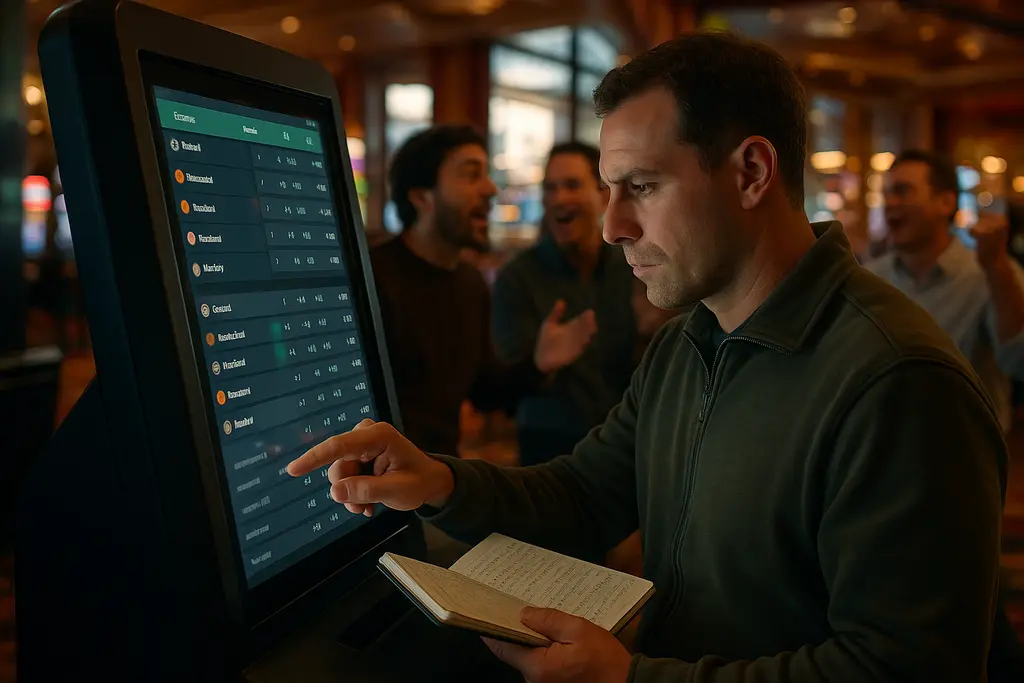
Sports Prediction Markets are now part of a serious regulatory debate, not just a side conversation for traders and sports bettors. The Commodity Futures Trading Commission’s recent advisory puts more pressure on designated contract markets to show that event contracts tied to sports comply with federal commodities law and CFTC rules.
For bettors, the practical issue is not whether these markets are exciting or whether they look cleaner than a standard sportsbook screen. The issue is whether the contract rules, market depth, access rules, and dispute process are clear enough to compare with a regulated sportsbook price. A market can look simple on the surface while still carrying contract-specific risks that are different from a moneyline, total, prop, or live bet.
This is also why comparison should stay careful. A contract price may appear to show probability more directly than American odds, but that does not make it automatically better. Liquidity, fees, spread, settlement wording, and legal access can all change the real cost of taking a position. For readers comparing betting products across operators, the broader price-versus-product issue is covered in our related piece on prediction markets and sportsbooks.
Why Sports Prediction Markets Are Under CFTC Review
Sports Prediction Markets And Event Contracts
The CFTC’s Division of Market Oversight issued an advisory on March 12, 2026, stating that designated contract markets must ensure event contracts, including sports-related contracts, comply with the Commodity Exchange Act and CFTC regulations, according to the agency’s CFTC advisory. That is a key starting point for bettors because it frames these products as regulated event contracts rather than ordinary sportsbook wagers.
A sportsbook usually posts odds and accepts bets under state gaming rules where the operator is licensed. A prediction market contract works through a different structure. Users may be buying or selling a yes-or-no outcome, and the price can move as participants trade. That structure can feel familiar to a bettor who already thinks in implied probability, but the rulebook is not the same.
The CFTC advisory matters because it signals closer review of how these contracts are listed, monitored, and resolved. Bettors should not treat the label on the app as enough information. The contract’s settlement source, event definition, cancellation rules, and market-monitoring process all matter. A football market on a game result may feel straightforward, while a contract tied to an award, player availability, or a narrowly defined event can turn on wording that is easy to miss.
What Bettors Should Check Before Comparing Prices
For bettors, Sports Prediction Markets require a different checklist than a sportsbook bet. The first question is whether the product is available where the user is located. The next question is whether the contract terms are clear. After that, price comparison only makes sense if there is enough market depth to enter or exit without paying a wide spread.
- Settlement rules: Check the exact source used to decide the contract result.
- Market depth: A displayed price may not be meaningful if only a small amount is available there.
- Fees and spread: Trading costs can reduce the apparent value of a better-looking price.
- Access rules: State and federal disputes may affect whether a user can participate.
- Responsible limits: Treat event contracts as risk products, not shortcuts around sportsbook discipline.
That checklist is not about finding a guaranteed angle. It is about knowing what is being compared. A sportsbook market and a prediction market contract can both be tied to the same game, but the consumer protections, pricing mechanics, and legal questions may differ.
How This Affects Sportsbook Comparison
Price Is Only One Part Of The Market
Sportsbook bettors often start with odds. That makes sense: price is the language of betting markets. Yet a lower hold or cleaner implied probability does not answer every question. A traditional sportsbook may offer player props, same-game parlays, live markets, and familiar bet grading. A prediction market may offer direct probability pricing and the potential to trade out, if there is enough liquidity.
The fair comparison is product against product. A bettor looking at a Sunday football matchup, a playoff series, or a major tournament final should ask what the market is actually offering. Is it only the winner? Is there a spread-like contract? Is there enough trading near kickoff? Are there contract rules that could affect settlement if a game is postponed or shortened? Without those answers, a better headline price may not be a better user experience.
Sportsbooks also vary widely. Regulated operators can differ on prop variety, live betting speed, payment options, house rules, and responsible-gaming tools. A related network resource like the one provided by You Can Bet On It offers valuable insights for those considering sportsbook comparison as part of their overall strategy, rather than relying solely on a single price screen as a complete market view.
Live Betting And Micro-Market Risk
Live betting is where the comparison can become more sensitive. In-play sports markets already move quickly after goals, injuries, pitching changes, red cards, timeouts, and lineup news. A prediction-style product built around very short windows can raise added questions around speed, information access, and integrity monitoring.
Research notes tied to the CFTC discussion point to concern around tightly defined sports outcomes, including very small event windows. Bettors should view that as a risk signal. The more granular the market, the more settlement clarity and surveillance matter. A full-game outcome is easier for most users to understand than a tiny in-game event where broadcast delay, data feed timing, or insider knowledge could change the price before the public can react.
This does not mean every live market is unsuitable. It means bettors should slow down before assuming a fast-moving contract is the same as a normal in-play sportsbook wager. If the market is thin, the displayed price may be stale or costly to trade. If the rules are unclear, the user may not know what has to happen for the contract to settle.
Sports Prediction Markets And State Access

Federal Oversight Meets State Gambling Law
The legal picture is not only federal. State-level challenges are now part of the user experience. In Utah, a federal judge allowed the state to enforce its anti-gambling laws against Kalshi, according to the Associated Press report. That case highlights the central tension: a platform may frame its product through federal commodities oversight, while a state may treat the same activity as gambling under state law.
For bettors, the takeaway is straightforward: access can change. Product menus can change. A market available in one place may be restricted in another. That is not a pricing issue; it is a jurisdiction issue. Trying to work around location rules is not a responsible path and can create account, legal, and withdrawal risk.
Readers following this part of the story may also want the state-focused angle in our article on Utah prediction market pressure. The state cases matter because they can shape whether bettors see these products as national trading venues, state-regulated gambling alternatives, or something still being tested in court.
Why Access Rules Matter To Pricing
Legal access can affect market quality. If fewer users can participate, liquidity may be thinner. If liquidity is thinner, spreads may widen. If spreads widen, a contract that looks efficient at first glance can become more expensive in practice. That is why regulation is not a side issue for price-sensitive bettors. It can affect the actual market they see on screen.
State pressure can also affect operator behavior. A platform facing legal challenges may adjust its market list, user eligibility, disclosures, or contract design. Those changes may be reasonable from a compliance standpoint, but bettors still need to read the current rules before participating. Old assumptions can become risky if the product changes faster than the user’s habits.
Responsible Use Of Sports Prediction Markets
A Bettor’s Risk Frame
Sports Prediction Markets should be treated as uncertain risk products. They are not guaranteed predictions, and they are not a safer route just because the price looks like a percentage. The same basic discipline applies: understand the event, understand the price, understand the rules, and be willing to pass when the market is unclear.
A careful bettor can use these markets as another source of information. If a contract price differs from a sportsbook line, that difference may say something about liquidity, fees, operator margin, news timing, or participant opinion. It does not automatically reveal the correct side. The useful question is why the prices differ, not which screen looks more tempting.
The CFTC’s closer attention gives bettors a reason to slow down rather than rush in. Stronger oversight may improve clarity over time, but the present comparison still requires caution. Read the contract, confirm access rules, compare the market depth, and remember that every sports outcome remains uncertain until it is settled under the stated rules.
Leave a Reply