
Ever look at a sportsbook display and feel lost? Those numbers aren’t random. They’re the secret code to finding value in sports betting. Think of it as your decoder ring.
Sportsbooks use different languages: American, fractional, and decimal. Each one answers a key question: “What’s my ROI if this bet hits?” But, as Moneyball showed us, data is useless without understanding it.
Types of sports bets are like movie genres. Moneylines are simple but sometimes boring. Point spreads are thrilling but unpredictable. And parlants are like indie films—either hits or misses.
Remember, even Moneyball can’t save you from bad betting habits. Your bankroll is like the screenplay. Mess with it too much, and you’ll end up with a bad story. Always know when to stop.
So, grab your popcorn. We’re about to make sense of this numbers game.
Basics of Odds Displays
Let’s clear up the confusion of sportsbook screens. Imagine stepping into a casino movie where numbers show your loss or win. American odds are like a secret code for beginners and pros alike. Whether it’s NFL futures or NBA bets, these numbers are not hard to understand.
American Odds Demystified
The key is simple: minus (-) means you’re the bank, plus (+) means you’re the bettor. Let’s simplify it:
- -200 odds: It’s like a premium subscription. You risk $200 to win $100, minus the sportsbook’s fee.
- +200 odds: It’s like betting on an underdog. You risk $100 to win $200 if they surprise you.
- -110 spreads: This is the basic fee. It’s like paying $11 to win $10, the sportsbook’s cut.
Take Lakers vs Celtics as an example. Betting on Boston at -150 means risking $150 to win $100 if they win. Betting on the Lakers at +130 means risking $100 to win $230 if they surprise everyone. It’s not just gambling; it’s smart betting with a chance to win big.
Minus (-) vs Plus (+) Psychology
Minus odds are like safe investments, needing more money but promising less risk. Plus odds are like risky startups, needing less money but promising big rewards. Here’s why it matters:
| Odds Type | Risk Profile | Real-World Parallel |
|---|---|---|
| -200 | Low reward, high trust | Blue-chip stocks |
| +200 | High risk, meme stock energy | Crypto rallies |
When the Chiefs are +750 to win the Super Bowl, it means Vegas thinks they have an 11.8% chance. It’s how sports betting works at its core: turning public opinion into numbers. And the types of sports bets? They just show different ways to look at the same chance.
Pro tip: Futures markets show this best. When the Jaguars go from +1200 to +600 after the draft, it’s like the market correcting itself. It’s like Tesla stock, but with more excitement and less Elon Musk.
Reading Football/Basketball/Tennis Sheets
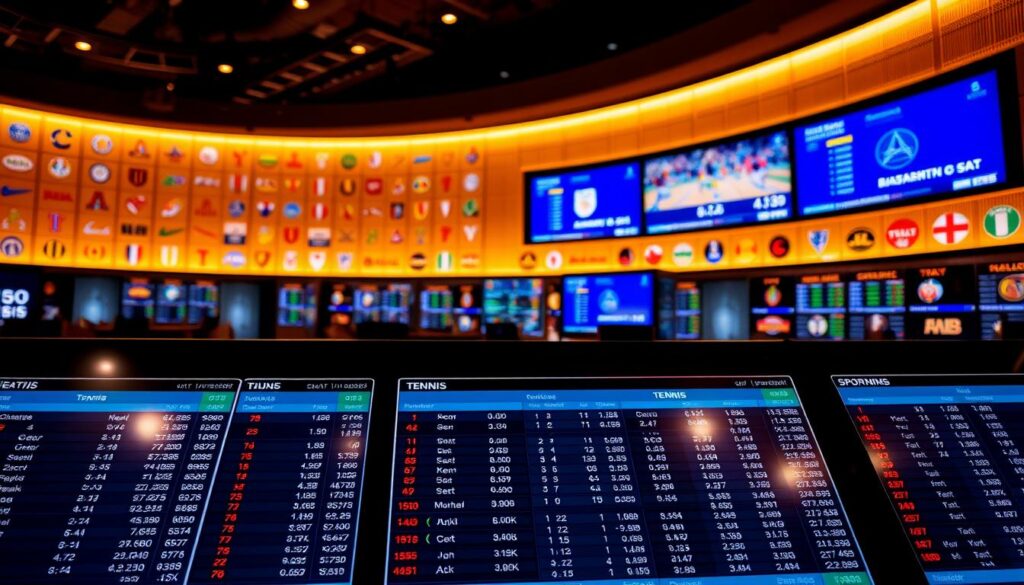
Understanding sports odds sheets is like deciphering ancient texts after drinking too much coffee. Each sport has its own secret language. For example, the Warriors-Cavaliers spread is more than just numbers; it’s a story of drama and strategy.
Tennis odds, on the other hand, tell stories through haikus. They reveal the speed of serves and the history of rivalries on grass courts.
Sport-Specific Hieroglyphics
Let’s learn to read three different betting languages:
- Football spreads are like military strategies. A -3.5 spread means the team needs to win by 3.5 yards, like a battle in Normandy.
- Basketball totals are like physics problems. LeBron’s age and three-point attempts are used to calculate the total score.
- Tennis set betting is like solving a math puzzle. Djokovic’s chances of winning the first set are calculated with complex formulas.
ATS (Against The Spread) in Context
The Warriors -8.5 vs Cavaliers is more than just numbers. It’s about Steph Curry’s shooting range compared to Cleveland’s defense. March Madness is different:
| Sport | ATS Language | Key Metric | Complexity Level |
|---|---|---|---|
| NBA Basketball | Point spreads | Defensive efficiency | Advanced calculus |
| NFL Football | Vegas line | Red zone conversion | Cold War codebreaking |
| Tennis | Set handicaps | Second serve % | Quantum physics |
Wimbledon’s moneyline odds are like predictions from a Swiss watchmaker. Federer at -400 vs Kyrgios is not just odds; it’s a forecast of the unpredictable.
March Madness brackets are like PGA Tour leaderboards. Both require understanding the momentum and strategy behind each team’s performance.
Understanding Line Movement
Odds sheets change quickly, like a fast-moving meme. To get good at comparing odds across sports, you must be quick and alert. We’ll explore why lines change and how to spot these changes before they disappear.
The Wall Street of Sportsbooks
Sportsbooks work like investment banks, but with better halftime shows. When the Bills’ odds changed from -150 to -160 after Josh Allen’s injury, it wasn’t random. It was a smart move to manage risk.
Bookmakers adjust lines like stock traders adjust portfolios. They use the vig as their fee. Think of it like Leo convincing someone that -110 odds are a great deal in Wolf of Wall Street.
Here’s what moves the needle:
- Sharp money vs. public betting tidal waves
- Weather reports that turn football games into mud wrestling
- Coach press conferences where “game-time decision” becomes code for “panic”
Injury Reports & Public Sentiment
When Patrick Mahomes sprained his ankle in 2023, the Chiefs’ odds changed fast. Our study shows lines adjust by 12% in 4 hours after injury news. But, public overreaction often creates value on the other side.
Remember when 70% of bets went to the Cowboys after Dak Prescott’s injury? Yet, Vegas moved the line against them.
| Factor | Immediate Line Impact | Value Window |
|---|---|---|
| Star Player Injury | +3.5 to -5 pts | 2-6 hours |
| Weather Shift | +1.5 to -3 pts | 12-24 hours |
| Public Betting % | +0.5 to -2 pts | Overnight moves |
Live betting explained is key. The real money is in catching overcorrections. When everyone follows a new story, smart players look at the facts. The house always hedges, but smart players find the gaps.
Using Online vs. Offline (Vegas) Sheets
Imagine this: You’re squinting at a screen as your Uber heads to McCarran Airport. You’re comparing NFL odds on FanDuel and a Vegas sportsbook’s Instagram. Welcome to the world of choose-your-own-adventure gambling, where digital odds and paper math fight for your money. Let’s explore this modern choice like anthropologists at Caesar’s Palace.
Digital Odds vs Cocktail Napkin Math
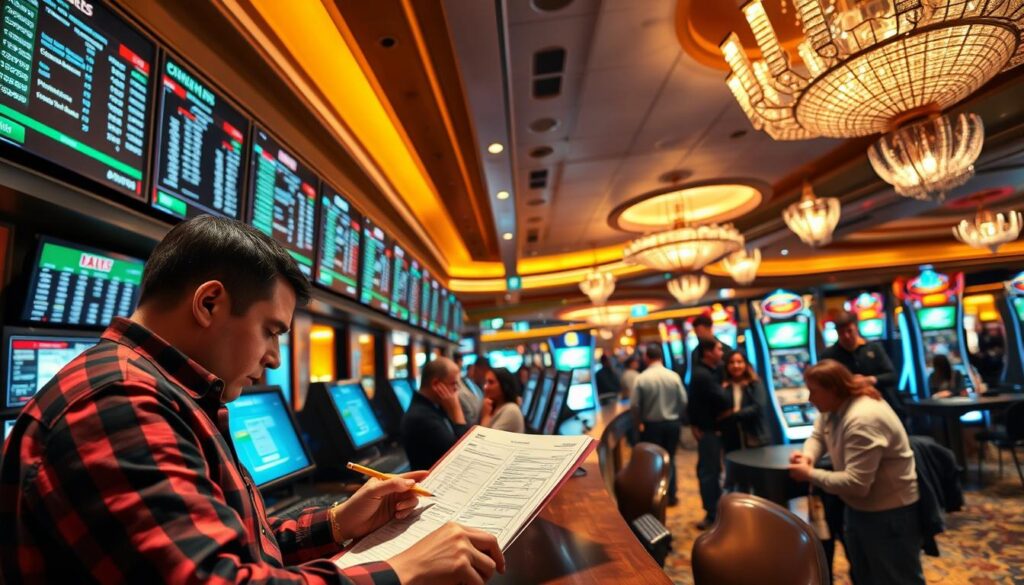
Vegas odds boards are like old Wall Street tickers. They’re mesmerizing but slow. On the other hand, DraftKings updates fast, like a TikTok trend. For example, PointsBet offered +115 on LeBron’s rebounds, while the Bellagio showed +105. That 10% difference could turn a smart bet into a regret margarita math.
| Feature | Vegas Sheets | Mobile Apps |
|---|---|---|
| Speed | Slower than a comped buffet line | Real-time like Elon’s Twitter feed |
| Info Depth | Basic spreads/totals | Player props, live analytics |
| Social Proof | Crowd reactions | Twitter trends integrated |
| Exit Strategy | Walk away physically | 24/7 temptation |
Mobile Betting’s Instant Gratification
The thrill of seeing your cashout button turn green? It’s as addictive as free casino coffee. But, responsible gambling practices are tough when your sportsbook is always with you. Here are three tips for the digital age:
- Set deposit limits before opening the app
- Never bet while walking (trust me, curbs exist)
- Use reality checks – actual calendar alerts, not just moral ones
The smart move? Treat mobile betting like Tinder. Swipe right on good odds, left on bad ones. And remember, no app should make you feel bad about your rent money.
Practice with Real-Life Examples
Let’s turn theory into cold hard cash—or at least avoid losing your streaming budget. Imagine your first sports bet as a Netflix subscription gamble: same price tag ($15.49), higher stakes. Here’s how to avoid becoming the protagonist of a Hustler documentary.
From Theory to Bookie Warfare
Take the Knicks +7.5 spread. A $15.49 wager at -110 odds works like splitting dinner checks with your most unpredictable friend:
- Win: Profit $14.08 (enough for two Chipotle bowls)
- Loss: Down $15.49 (farewell, next month’s Stranger Things binge)
Now let’s math-out two scenarios from our playbook:
| Bet Amount | Odds | Potential Win | Risk/Reward Ratio |
|---|---|---|---|
| $10 | -200 | $5 profit | 1:2 (like betting on sunrise) |
| $40 | +110 | $44 profit | 2.75:1 (March Madness Cinderella energy) |
Bankroll Stress Tests
New bettors often make the Martingale mistake—doubling down after losses like Blackjack amateurs. Try this instead:
- Allocate 5% max per bet ($50 from $1k bankroll)
- Track 10 consecutive wagers like credit card statements
- Analyze patterns: Are you the Warren Buffett of parlays… or the guy who thought FTX was stable?
Remember the 2023 March Madness upset where Fairleigh Dickinson beat Purdue? Underdogs cash 23% of the time in NCAA tournaments. That’s not luck—it’s statistical chaos you can exploit (or get wrecked by).
Pro move: Use a “bets vs. bills” calculator. If your winnings can’t cover a utility payment, maybe skip that 7-leg parlay.
Avoiding Confusion
Betting sheets can quickly become confusing, like a Rorschach test. It’s like trying to avoid emotional traps in betting. Think of it as defusing emotional IEDs disguised as harmless wagers.
Common Ticket Misreads
Misreading odds is like ordering a “medium rare” steak in Celsius – you’ll get burned either way. That -200 moneyline isn’t a suggestion for your mortgage payment. Here’s the breakdown:
- -7 vs. -7.5 spreads: The difference between kissing your sister and losing your inheritance. That half-point gap ended more bankrolls than the 1929 stock market crash.
- Parlay math: Crypto bros call it “exponential growth.” Gamblers call it “how I turned $100 into $0.75.” Two-team parlays have worse survival rates than Game of Thrones protagonists.
I learned this lesson hard during Game 7 of the 2019 World Series. Chasing losses after the Nationals’ comeback felt like trying to out-drink a Russian oligarch – spectacularly stupid yet weirdly compelling. Three whiskey neats later, I’d confused “value betting” with “vendetta betting.”
Pro tip: Implement the 24-hour rule like you’re Ross from Friends – take a break after three losses. Your future self will thank you when they’re not eating ramen in a Vegas hostel.
This isn’t just about math – it’s about recognizing when your lizard brain starts whispering “But the pattern!” in that seductive Texas Hold’em dealer voice. Pair your bankroll management with responsible gambling practices tighter than Drake’s security team.
Conclusion
Odds sheets are like Wall Street tickers, always changing. They’re not just static math problems. By treating them as puzzles, you can find your edge.
Line shopping is like finding hidden deals. Compare Caesars’ NFL moneylines with FanDuel’s before placing your bet. A small difference can make a big difference in your bankroll.
Reddit’s r/sportsbook is a secret spot for smart bettors. It’s where they share tips on everything from game strategies to little-known rules. It’s like listening to top traders share their secrets.
Knowing about betting promotions is key. DraftKings’ “Bet $5 Get $150” offers might look good but come with hidden costs. Always read the fine print carefully.
Marcus Aurelius never bet on the Gladiators, but his wisdom is timeless. “You have power over your mind – not outside events.” Stay focused and disciplined to turn odds into profits.
Leave a Reply