
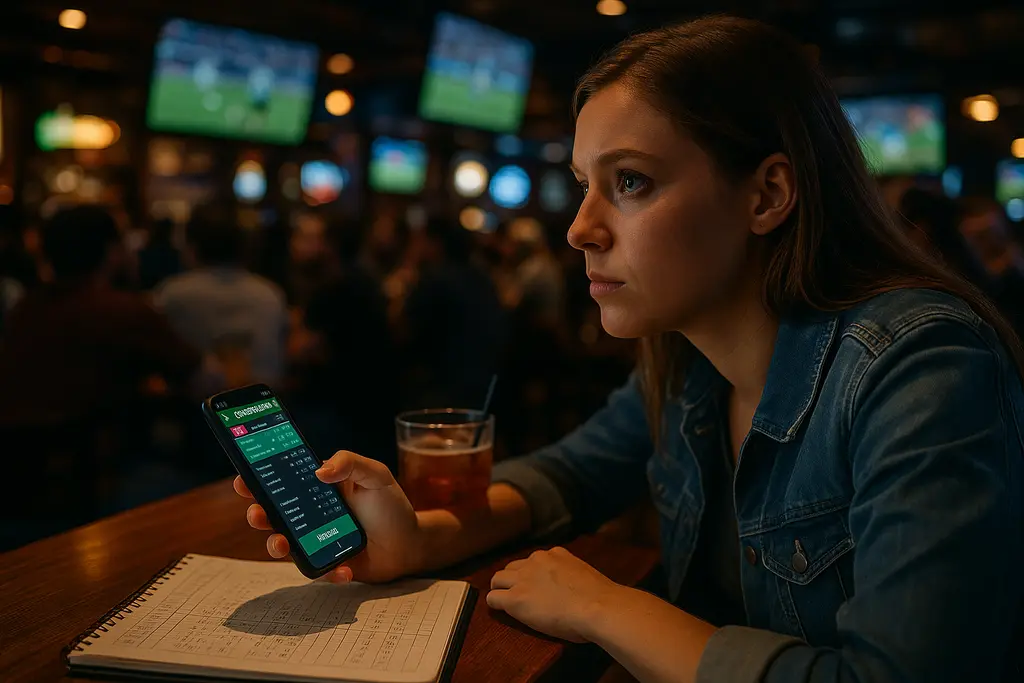
Sports Betting Influencers can make betting feel simpler than it is. A short video, a confident pre-match slip, or a screenshot of a winning ticket can compress a complicated market into one quick impression. That impression may be entertaining, but it is not the same as a priced, tested, and risk-aware betting decision.
The concern in 2026 is not that every influencer post is dishonest. The more realistic issue is that social content often removes the parts of betting that matter most: losing runs, closing-line movement, bookmaker margin, market limits, and the financial strain that can come with constant access. Forbes reported that online sports bettors were 15 times more likely to miss bill payments than in-person gamblers, based on a cited report about gambling and financial health Forbes report. The AP has also reported that the spread of online gambling has raised concern among public health experts and financial advisers AP risk report.
Why Sports Betting Influencers Can Distort Risk
Sports Betting Influencers And The Highlight Effect
Influencer betting content is built for attention. Winning screenshots, quick edits, and confident phrasing are more shareable than a full record of prices, losses, voids, and market movement. That creates a highlight effect. The viewer sees an outcome, not the full distribution of possible outcomes.
Research supplied for this article described a study that tracked 5,467 pre-match bets promoted by three prominent Nigerian betting influencers. The study reported that those promoted bets collectively lost 25.24%. It also reported that followers who placed the same amount on every tip lost 38.27% on their investment. Those figures should not be treated as a universal measure of every market or every influencer, but they show why an attractive public record can still hide poor consumer outcomes.
What Follower Returns Can Hide
Sports Betting Influencers usually publish a selection of moments, not a full betting ledger. A follower may enter later than the influencer, receive a worse price, miss an odds move, or copy only the picks that appear at the top of a feed. Even if the original post was accurate at the time of publication, the follower experience can be different once a market moves.
This gap matters most in high-demand markets. A football moneyline, a same-game prop, or a live-betting angle can shift quickly after team news or early game flow. A post that looked attractive at one price may be much less attractive minutes later. That does not make the post a guaranteed loss; it means the consumer needs to judge the price they can actually access, not the price shown in a screenshot.
2026 Consumer Risk Signals
Access Makes Discipline Harder
Online betting reduces friction. A bettor does not need to travel, wait in a line, or pause before making another decision. That convenience can be useful for people who already have firm limits, but it can also make repeated betting feel routine. The financial-risk concern grows when social media supplies constant prompts and mobile sportsbooks make response time nearly instant.
Influencer content can add emotional pressure. A viewer may feel late to a market, worried about missing a move, or tempted to chase the next promoted ticket after a losing one. None of those reactions improve price evaluation. They make the decision more about urgency than probability.
Promotion, Proof, And Missing Context
The research notes for this article also pointed to investigations and reports about misleading promotional content, including claims of fake winning bets in social-media campaigns. The key consumer lesson is simple: proof needs context. A winning ticket without the full sequence of prior bets is not a performance record. A profit graphic without stake size, number of bets, settlement rules, and available odds is not enough to evaluate skill.
For readers comparing sportsbook offers, the same caution applies. A larger listed payout can look better while still carrying higher risk, worse pricing, thinner limits, or rules that differ from another operator. Price comparison is useful, but it should sit inside a wider check of terms, licensing, customer protections, and personal affordability. Additionally, exploring low-juice sportsbook comparisons can provide insight into operator margins, though it’s important to remember that lower margins don’t eliminate risk.
Testing Sports Betting Influencers Against A Market
Price Is The First Filter
A reader assessing Sports Betting Influencers should start with the market, not the personality. Is the posted price still available? Has the line moved? Is the operator offering the same market rules? Are there comparable prices elsewhere? If a tip depends on a number that disappeared before followers could act, the public post may be less useful than it appears.
This is where basic value thinking helps. A bet is not stronger just because it wins once, and it is not automatically poor because it loses once. The useful question is whether the price was fair against the realistic chance of the outcome. For a deeper primer on that mindset, see this site’s guide to value before prediction. Readers who compare margins across operators can also review related resources such as low-juice sportsbook comparisons, remembering that lower margin does not remove risk.
Match Context Still Matters
Influencer tips often arrive as short claims: a team to win, a player to score, an over, an under, or a prop tied to a televised event. Those markets are shaped by context. Injuries, rotation, venue, schedule congestion, motivation, weather, and officiating tendencies can all affect pricing. If a post does not explain which factors matter, the follower is left with a conclusion but not the reasoning behind it.
Live betting adds another layer. A market can update after every possession, attack, substitution, or injury break. That speed can make social tips stale before they reach a viewer. A responsible evaluation asks whether the market still reflects the same conditions that existed when the content was posted.
A Responsible Consumer Checklist
Questions Before Copying A Tip
There is no checklist that can turn betting into a guaranteed outcome. Still, a short review can slow down rushed decisions and separate entertainment from analysis.
- Ask for a full record: A small set of winning posts is not the same as a complete history of wins, losses, prices, and settled markets.
- Check the available price: If the line has moved, the original reasoning may no longer match the current market.
- Read the rules: Props, voids, extra-time treatment, player participation rules, and settlement sources can change the real risk.
- Compare regulated options: Licensing, dispute processes, responsible-gaming tools, and withdrawal rules matter as much as the headline odds.
- Keep finances separate: Betting should not compete with bills, debt payments, rent, food, or emergency savings.
The most useful habit is to treat influencer content as a prompt for review, not as instruction. If the only reason to place a bet is that a public account sounded confident, the decision is probably missing the analysis needed to judge risk.
Practical Checks Before Trusting Sports Betting Influencers
Separate Content From Decision-Making
Sports betting content can be useful when it points readers toward team news, market movement, or a pricing question they had not considered. It becomes risky when confidence replaces evidence. Betting markets price uncertainty. No influencer, model, or sportsbook removes that uncertainty.
For 2026, the safer consumer approach is slower and less reactive: verify the record, check the price you can actually get, compare sportsbook rules, and ask whether the bet still makes sense without the social-media framing. Sports Betting Influencers may remain part of the betting conversation, but the financial decision belongs with the person taking the risk.
Leave a Reply