

Let’s be honest. Finding real betting education can feel like searching for a needle in a haystack. Every booth seems to promise the secret, but it’s mostly just marketing tricks.
Welcome to the antidote. Think of this as a trip to the library, not the casino floor. We’re trading luck for logic.
Platforms like Unabated understand: a smarter bettor helps everyone. My goal is to clear the fog and help you build a strong foundation. This is about creating a repeatable, analytical process.
We’ll break down markets for football, basketball, and tennis. Forget the hype. We’re here to do the homework so you can find sustainable edges. Ready to move from guesswork to a real prop betting strategy?
Market mechanics: limits, posting times, alt lines, SGP caveats
Your brilliant prop analysis is useless if you’re betting against a ghost—a market that’s limited, unavailable, or rigged with hidden costs. This is the casino’s rulebook, and most aspiring sharps face-plant right here. They find an edge, only to be greeted by a digital pit boss in the form of a betting limit or a suddenly “unavailable” prop.
Anthony Kaminskas of AKBets showed us that modern bookmakers focus more on compliance and risk management than on trading. Your clever bet isn’t a challenge to their genius; it’s a compliance flag. They will limit you. They might restrict your account. This isn’t personal; it’s business. Your first lesson is to accept this as a fundamental constraint, like gravity.
The Clock is Ticking: Posting Times and Market Pace
Prop lines don’t just appear. They’re released on a schedule, and being there first is a skill. The pace of this information release is critical. Injury reports, starting lineups, and weather updates create windows of opportunity. If your research pace doesn’t match the market’s, you’ll always be late to the party, staring at a line that’s already been hammered into oblivion.
So the main line is -110, but you want a safer cushion. The book kindly offers an “alternate line” at a better number. It feels like a gift. It’s not.
Alternate lines are where vig goes to hide. That extra half-point on an Over might come with -140 odds instead of -110. The book has simply repackaged the house edge, making it less transparent. You’re not getting more value; you’re paying a premium for psychological comfort.
Same Game Parlays: The Blockbuster Trap
Same Game Parlays (SGPs) are the betting equivalent of a cinematic superhero team-up. They look spectacular on the poster. Iron Man, Thor, and Captain America all winning together! But the plot usually has holes.
Books love SGPs because they allow them to bake in massive vig on correlated outcomes. A parlay of “QB throws a TD + RB scores a TD” seems independent, but they often feed off the same drive. The book charges you parlay odds while understanding the correlation, pocketing the difference. It’s a sucker’s bet dressed in confetti.
| Market Type | Availability & Limits | Vig Structure | Primary Risk | Best For |
|---|---|---|---|---|
| Standard Prop | Widely available, but limits apply quickly to sharp action. | Transparent (-110 to -115). The cleanest edge. | Account restriction after consistent winning. | Core value betting. Your bread and butter. |
| Alternate Line | Always available, rarely limited. | Opaque & inflated. Vig can be 20-30% higher. | Overpaying for marginal line movement. | Hedging or locking in middles, not primary value. |
| Same Game Parlay (SGP) | Unlimited, heavily promoted. | Extreme. Hidden correlation tax makes it the worst. | Illusion of value. A bankroll sinkhole. | Entertainment only. Treat like a lottery ticket. |
Mastering these mechanics is non-negotiable. It sets the pace for everything that follows. You can have the best model in the world, but if you don’t understand the rules of the cage, you’ll never get in the fight. Now, with the rulebook memorized, we can focus on the players.
Building stat baselines: pace, plays per game, usage/minutes, snap rate
The pros treat player props like a science experiment. They start with pace, usage, and snap counts. Betting on a player without knowing their role is like baking a cake without preheating the oven.
This isn’t about the matchup’s glitter. It’s about the solid ground beneath your feet. Analysts on Sharp Betting and inplayLIVE podcasts teach the importance of data. They help you move from gut feelings to profits.
So, what’s in the toolkit? First, pace. Is the team fast like the Suns or slow like the Knicks? Pace affects the number of possessions, the base for all stats.
Next, plays per game or offensive volume. A team that’s fast but doesn’t score much is less valuable. Knowing how often the ball is passed is key.
Then, the player’s role: usage rate and minutes. Is the player a key player or just a background figure? Snap counts and minutes projections show this. A high snap share means a big role, while low minutes mean less impact.
These metrics work together. High pace and usage are great, but high usage with low minutes can be a trap. You need the whole picture.
The table below shows how these concepts apply across sports. It’s your guide for where to start.
| Sport | Key Pace Metric | Usage/Volume Indicator | Role Health Metric | Baseline Data Source |
|---|---|---|---|---|
| Football (NFL) | Plays per Game (Offensive Snaps) | Target Share % / Rush Attempt Share | Snap % | Team O-Line Reports, Play-Caller Tendencies |
| Basketball (NBA) | Possessions per 48 Minutes | Usage Rate % | Avg. Minutes | Rotation Charts, Coach History |
| Tennis | Points per Match (Tournament Avg.) | Serve & Return Dominance | Games Played Prior Rounds | Surface-Specific Stats, Tournament Draw |
Notice a pattern? Minutes projections and snap counts are not just suggestions. They show what the coaches plan. Ignoring them is betting against the system.
This work isn’t glamorous. It’s the hard work before the fun. It makes you a proactive bettor. Knowing a player’s role well helps you analyze matchups better. Without it, you’re just guessing.
Football props: role changes, red‑zone share, weather effects
Football isn’t just numbers on a page; it’s a live show that changes every week. Your stats are like the script, but the real action happens on game day. This is where prop bets come to life or fade away.
Role changes can be big. That top RB might miss a game due to injury, leading to a committee. A backup RB can steal the show, taking away from your bet. Watching practice and listening to coaches is important, but watching the game itself is key.
The red zone is where fantasy football logic goes out the window. Plays get weird, and who gets the ball changes fast. It’s not just about total targets; it’s where they happen. A player with few targets but lots in the red zone is a great bet.
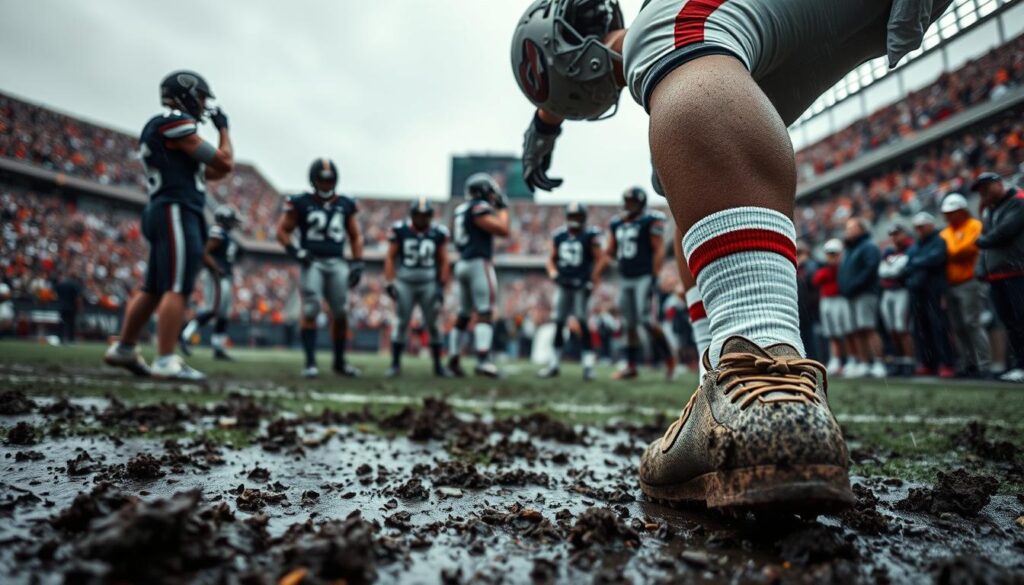
Weather is a big factor too. A strong wind in Chicago can change everything. It affects passing and kicking, making some bets better and others worse. A quarterback’s skills matter less in bad weather, making ground plays more important.
Combining these factors—spotting role changes, red-zone action, and weather—can lead to great bets. It’s about mixing research with watching the game live. The sportsbook can’t do that. You can, giving you an edge.
Basketball props: pace, matchup schemes, foul risk, rest/load mgmt
Basketball props are like a fast-paced game where you have to act quickly. The Pinnacle Odds Dropper review found basketball to be a top choice for sharp bettors. This is because there are many chances to win and clear ways to do so.
To succeed, think like a coach, not just a numbers person. A player’s average stats are not as important as what happens in the game. The game is a unique, fast-paced event.
Let’s talk about pace. Pace refers to the game’s speed and how many possessions there are per 48 minutes. A fast-paced game means more chances to score and grab rebounds. But, you need to adjust your strategy quickly because the pace can change a lot.
Next, we have matchup schemes. If a star guard is facing a tough defense, he might take more shots. Or, if he’s up against a defense that likes to pull up for three-pointers, he might pass more. You’re betting on how a player will perform in a specific situation.
Foul risk is another key factor. If a big man gets two quick fouls early, he’ll play differently. This can affect his chances to grab rebounds and block shots. Watching for early fouls is like getting a sneak peek at the game’s outcome.
Lastly, rest and load management are big in the NBA today. When a player is rested, it changes how the game is played. It can affect who scores and how much. This is where you can find value in the odds.
Basketball props require quick thinking and understanding of the game. You need to consider pace, strategy, player health, and coaching decisions. It’s a challenging but rewarding game.
Tennis props: hold/break rates, surface splits, fatigue, in‑match momentum
Forget the drama of grand slams. The real money is in the serve’s cold math. It’s not about cheering. It’s about analyzing every detail.
The game’s foundation is the serve hold %. It’s like a player’s shield. If they hold 85% of the time, they’re in control. The bookmaker’s line is just a guess. We look for the hidden flaws.
Surface splits add color to the math. A clay-court player on grass is like a fish out of water. Their game and serve hold % can disappear. Every stat must be split by surface. A player’s hard-court stats mean nothing on grass.
Fatigue is a silent killer. A player who played long yesterday is different today. Their first-serve percentage drops. The serve hold % you counted on? It’s now based on a tired body. This isn’t just feeling; it’s measurable decline.
Then, there’s the mental game: in-match momentum. Tennis can change quickly. A break can deflate a player for games. Saving break points can boost confidence. The trick is to spot when odds have swung too far, revealing a chance to bet on the next set.
The syndicate view, as Waterhouse explains, sees tennis as a top investment. We bet on the gap between a player’s true serve hold chance and the bookmaker’s guess. It’s all about probability. Ignore the name; focus on the serve hold %, surface, fatigue, and momentum. That’s how you become a strategist in the game.
Line sourcing: projections vs market, vig removal, EV calc
You’ve built your stat baselines and adjusted for matchups—now comes the capitalist moment: sourcing the actual line. This is where your analysis meets the market’s reality. It’s the difference between being a sports theorist and a sports capitalist.
Think of line sourcing as a three-act play. Act One is the projection. You have your number—maybe from a trusted model, maybe from your own spreadsheet. Act Two is the market price, the consensus number hanging on the sportsbook’s digital shelf. The climax? The gap between them.
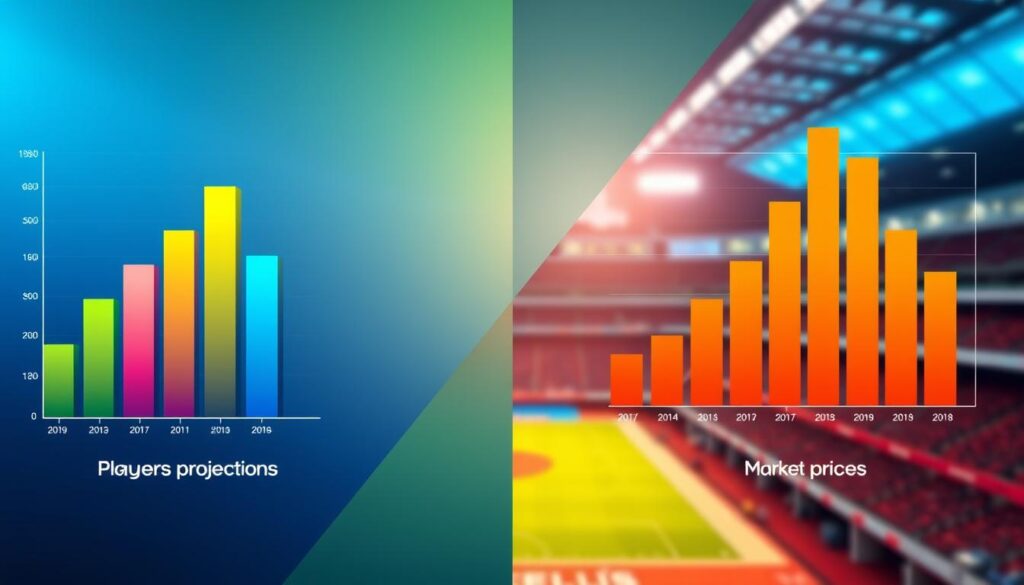
Your first job is simple comparison. Is your projection for a quarterback’s passing yards 245, while the book has it at 230.5? That’s a possible edge. But remember, the listed price isn’t the true price. It’s dressed up with the bookmaker’s profit margin, the vig.
This leads to Act Two’s critical surgery: vig removal. A standard -110 line implies a 52.4% probability needed to break even. Strip out the vig, and you get the market’s true implied probability—often around 50% for a coin flip. Tools and calculators do this instantly. Why does it matter? It lets you compare your true estimated probability against the market’s true probability, apples to apples.
Now, for the grand finale: the Expected Value (EV) calculation. This isn’t complex math. It’s a simple formula: (Probability of Win * Total Profit) – (Probability of Loss * Stake). If the result is positive, you have a +EV bet. It means, in the long run, this wager will make money. The POD review of over 345,000 logged bets provides the empirical proof. Their data showed a strong correlation between positive Closing Line Value (CLV) and profitability.
What’s CLV? It’s the difference between the line you bet and the closing line. If you took a running back’s over at 75.5 rushing yards, and the line closes at 78.5, you captured positive CLV. You beat the market move. The POD data screams that consistently capturing CLV is a hallmark of sharp player props action.
The mantra is embarrassingly simple: bet where your number is sharper than the market’s. But simplicity is deceptive. It requires conviction in your projections and the discipline to act only when the edge is clear. Then, you need volume. A single +EV bet is a anecdote. A thousand of them is a strategy. This is where the law of large numbers does its slow, boring, and incredibly profitable magic.
So, you don’t need to be right every time. You just need to be right more often than the price suggests, and you need to bet it enough times for the math to play out. That’s the capitalist’s game. Find the gap, remove the vig, calculate the edge, and fire. Rinse. Repeat.
Late news exploitation and injury protocols
Forget the old way of betting. The real money is made in the moments after news hits. It’s not just about what happens before the game. It’s about spotting chances when a player gets hurt or a storm hits.
Andrew Pace’s success in live betting is a lesson in quick thinking. He looked for chances when a player’s absence made a receiver’s price too low. This is what we aim for. The first line is just the start. The real money is in the late hours.
To succeed, you need to stay informed. Set up alerts for breaking news from reliable sources. Keep an eye on the team’s website and the league’s injury report. But it’s not just about the words. A coach’s vague comment can mean a player’s minutes will change.
Understanding injury reports is key for pros. “Questionable” doesn’t tell you much. Look at if the player is traveling with the team and if they practiced. “Doubtful” often means “Out,” but not always. You need to check practice reports to know for sure.
| Official Designation | The Real Meaning (Usually) | Prop Betting Impact |
|---|---|---|
| Questionable | A 50/50 coin flip. Leans heavily on pre-game workout results and insider whispers. | Massive volatility. Lines for the player and his direct backup are soft. Watch for late money. |
| Doubtful | Unlikely to play. Often a 75%+ chance they are inactive. Teams hedge for strategic reasons. | Backup’s props become goldmines. The starter’s line, if stil up, is often a trap. |
| Out | Definitely not playing. The news is baked in, but secondary effects are not. | Focus on the next man up and how the opposing defense adjusts. Target the #2 receiver or backup RB. |
Coach-speak and weather are the biggest sources of chaos. When a coach talks about “load management,” it means less playing time for that player. A sudden weather change affects everyone, not just quarterbacks.
Having the right info is just the start. You need to act fast to win. Keep your betting money ready. Know which sportsbooks are slow to update after news breaks. Bet the new line before it changes, to get the best value.
In the end, it’s about turning panic into a plan. It’s a methodical way to make money from chaos. By understanding injuries, coach talk, and acting quickly, you’re not just betting. You’re making the most of the market’s confusion. That’s where the real skill is.
Record‑keeping: units, closing prop value, model drift
If your betting log is empty, you’re not a sharp bettor; you’re giving money away. It’s not about showing off wins. It’s about keeping a detailed record for analysis.
Proper record-keeping logs three key data points for each bet. First, the exact units risked. Second, the win/loss outcome. Third, the closing line value.
The closing number is your report card. Winning against the opening line is one thing. But beating the final market price shows you were sharp. If you win but the line was better, you missed out. If you lose but the line moved against you, you were unlucky. This data helps you know if you’re sharp or not.
This method also shows model drift. Your smart matchup adjustments might not work anymore. Without tracking, you can’t tell if you’re having a bad week or if your system is broken.
Learn from the pros at Sharp Betting. They log every pick with its stake, closing line, and result. This isn’t just for show. It helps them know if they’re just having a bad week or if their system is failing.
| Metric | Punter’s Log | Sharp’s Log | Why It Matters |
|---|---|---|---|
| Units Staked | “Guesswork” | “Exact, to the decimal” | Calculates true ROI and manages bankroll risk. No more fuzzy math. |
| Closing Line Value | Never checked | Logged for EVERY bet | The ultimate audit. Confirms you beat the market, not just your bookie’s opener. |
| Matchup Adjustments Note | None | Evaluated post-game: e.g., “Did the LB coverage scheme work?” | Tests your model’s core assumptions. This is how you spot model drift early. |
| Result Context | “Win” or “Loss” | “Win (Variance – dropped TD)” or “Loss (Edge – line was soft)” | Separates luck from skill. Informs process, not just emotion. |
This careful habit turns gambling into a craft you can measure. It turns stories into facts. Knowing your exact closing line value and auditing your matchup adjustments means you’re investing, not just betting.
Conclusion: weekly routine and risk controls
You now have the tools you need. The real challenge is to live with these tools without letting them take over. View yourself as the casino, not the gambler. This mindset, promoted by coaches like Elliot Roe and Samm Hunter, is key. It’s about controlling your emotions and seeing your betting as a long-term plan.
Your new weekly routine is straightforward. Begin by gathering news and checking lines across your favorite sports. Use your stats and projections to make decisions, then review them. This prop betting strategy helps you make sense of the noise and find profit. Aim for small, steady wins in football, basketball, and tennis, not big, one-off scores.
Strong risk controls are essential. Decide on your bet size to handle ups and downs. Set limits on daily losses to keep your mind strong. Know when to stop betting when the edge disappears. For more on betting strategies and risk management, check out this parlay betting guide.
Make this routine a part of your life. You’re not looking for excitement. You’re running a business that requires discipline.
Leave a Reply