
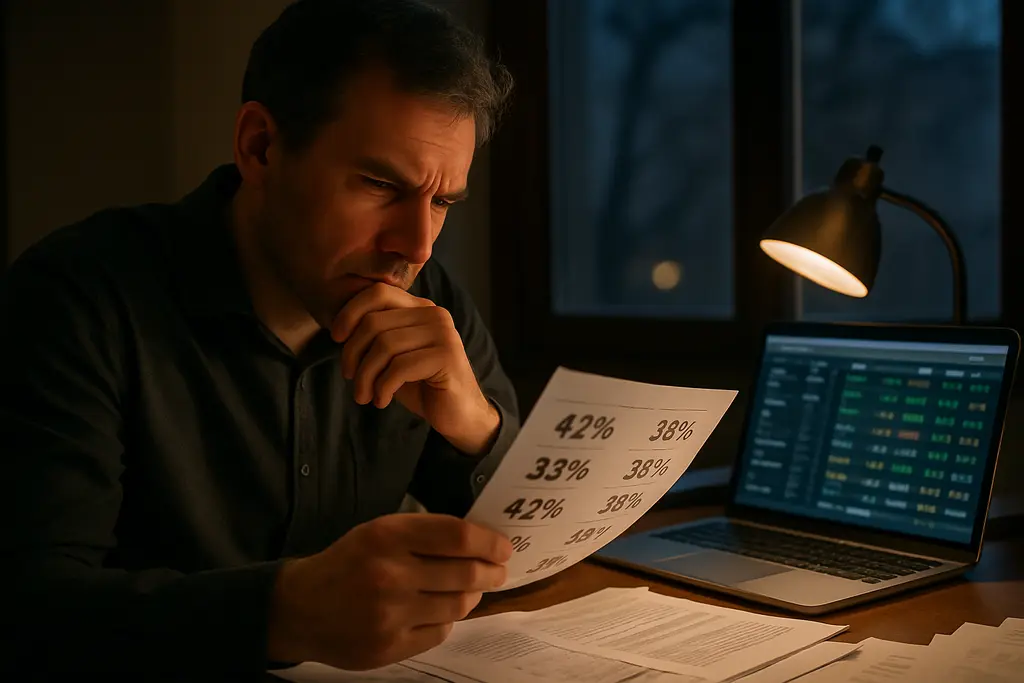
percentage-based odds became the visible price format for ProphetX users after a regulatory push that reached prediction-market operators in late summer 2026. On August 7, 2026, the U.S. Commodity Futures Trading Commission warned federally regulated prediction markets that American-style gambling odds could mislead users about the nature of the transaction, according to Bloomberg Law. By September 4–5, 2026, ProphetX, Novig, and Kalshi had moved away from the familiar plus/minus display toward probability-style pricing for markets that can include spreads, moneylines, totals, and props.
For bettors used to sportsbook screens, the change was not cosmetic. American odds do more than show a payout; they frame the event in a language many U.S. sports bettors already understand. A probability display asks the user to think in implied chances instead. That can improve clarity for some traders, but it can also slow decisions for users who built habits around moneyline notation. The shift was less about predicting match outcomes and more about how a federally overseen market presents risk, price, liquidity, and user intent.
Why percentage-based odds Replaced American Odds
The CFTC Trigger Behind The Change
The CFTC’s concern, as reported, was that American-style odds could make event contracts look too much like conventional gambling products. That distinction matters because prediction markets operate under a different regulatory theory than state-licensed sportsbooks. A sportsbook lists odds, takes the other side of many bets, and manages margin. An exchange-style platform is built around users trading contracts with one another, with the platform’s role centered on facilitating the market.
That is why presentation became a regulatory issue. If a screen shows +150 or -120, many sports bettors read it as a familiar wagering menu. If the same position is shown as a probability, the interface pushes the user toward a market-contract interpretation. That does not remove risk, and it does not make a trade safer. It changes how the risk is communicated.
How percentage-based odds Change The Screen
The new percentage-based odds display makes probability the front-facing language. A user looking at a team, total, spread, or prop-style contract sees a market-implied chance rather than a standard U.S. moneyline. In practice, the underlying question may still feel familiar: will a team win, will a total go over, or will a player-related event occur. The screen, though, now makes the contract’s probability framing harder to miss.
Industry reporting said platforms notified traders through channels such as Discord or email that American odds were no longer available, and that users saw the format change in the app around September 4, 2026, according to Gambling Insider. That timing matters because it suggests a quick compliance response rather than a long product experiment. The change was imposed on a user base that had already learned one display language and then had to adjust to another.
What Changed For ProphetX Users
Market Mechanics Versus Market Presentation
The central point for ProphetX users was that the format changed visually, while the market idea remained tied to trading contracts. In other words, the app could still offer markets built around sporting outcomes, but the way prices were expressed shifted. A trader was no longer seeing a standard American odds label as the default presentation. Instead, the user had to read the price as a percentage or probability-style number.
This matters for decision quality. A user who sees a plus-money price may instinctively think in payout terms. A user who sees a probability may ask whether the displayed chance is too high or too low relative to their own estimate. Neither method creates an edge by itself. Both require the user to understand fees, liquidity, spread, settlement rules, and the chance that prices move before an event is resolved.
Why User Friction Was Predictable
Negative user reaction was not surprising. Sports bettors in the United States have spent years reading American odds across regulated sportsbooks, media screens, and betting content. Removing that format changes muscle memory. Reports of users asking for American odds to return, or searching for tools to convert probabilities back into familiar notation, fit a predictable pattern: the market changed the interface faster than user habits could adjust.
There is also a psychological difference. American odds can make long prices feel simple because they show the return against a stake. Probability can make the same position feel more direct but also more demanding. A 40% display asks the user to judge whether the real chance is above or below 40%, while a plus-money line may lead the user to focus first on payout. Careful comparison starts by recognizing that both are just representations of price, not predictions that remove uncertainty.
Sportsbook Comparison And Market Context
Why Sportsbook Readers Should Care
For readers who compare sportsbooks, ProphetX’s change is part of a wider pressure point between betting platforms and prediction markets. Sportsbooks still tend to win on familiar odds menus, promotions, live betting layouts, same-game parlay products, and state-level consumer-protection structures where legal betting is available. Prediction markets appeal to a different habit: reading a contract price, watching liquidity, and deciding whether the market probability is worth trading.
That distinction connects directly to prediction markets vs sportsbooks, because the products may cover similar sports questions while using different rules and pricing models. A bettor comparing the two should avoid treating them as interchangeable. One display may show a moneyline, another may show a probability, and each may carry different fees, settlement language, access rules, and liquidity conditions.
For operators and analysts, there’s a critical viewpoint in the industry that links to sportsbook software. This source highlights why pricing displays, order flow, and user experience intertwine deeply. The way a price is presented can influence how quickly users grasp it, how they compare it with other options, and whether they perceive the product as a trade versus a traditional bet.
Market Depth, Live Context, And Props
A percentage-based screen can be clearer only if the surrounding market information is also clear. In an exchange setting, users need to care about depth and price impact. A displayed probability may look clean, but a thin market can move sharply when a user tries to enter or exit. That is different from simply glancing at a sportsbook line, where the operator generally posts a take-it-or-leave-it price subject to limits and movement.
Live markets and props make the issue sharper. In fast-moving game conditions, a probability display can update quickly, but the user still needs to understand whether there is enough liquidity to trade at or near the visible price. For props, settlement rules may be just as important as the number on screen. A readable format helps, but it does not replace checking the contract terms and understanding what event officially decides the result.
- American odds emphasize payout language that many U.S. bettors already know.
- Probability displays emphasize implied chance and contract-style pricing.
- Exchange-style markets require attention to liquidity, spread, and exit conditions.
- Sportsbook markets require attention to margin, limits, rules, and operator terms.
User Response To percentage-based odds

Why Familiarity Still Matters
A percentage-based odds screen can be useful for disciplined users because it puts probability at the center of the decision. Still, familiarity matters in real betting and trading behavior. A user who needs to convert every number back into American odds may make slower choices, misunderstand value, or rely on quick mental shortcuts that are not accurate enough for serious comparison.
The responsible approach is not to argue that one display is automatically better. It is to ask what information the display makes easier to understand and what it hides. Probability can make implied chance more direct. American odds can make potential return more direct. Both can mislead if the user ignores market cost, timing, liquidity, settlement rules, or personal risk limits.
No Format Removes Uncertainty
The key caution is simple: a format shift does not create a better forecast. Whether a user sees +150, decimal odds, or 40%, the event can still break against the position. A price is a market signal, not a promise. That is especially true in sports, where injury information, lineup changes, weather, coaching choices, and late market movement can all affect how a market behaves before resolution.
For that reason, the ProphetX case should be read as a product and regulation story first. It is not a signal to chase any side, and it is not evidence that exchange-style pricing is automatically superior to sportsbook pricing. It shows how regulators are trying to separate federally overseen prediction contracts from state-regulated sports betting, and how users react when a familiar betting language is removed.
ProphetX Odds Format Shift After CFTC Pressure
ProphetX’s move away from American odds after the August 7, 2026 CFTC warning marked a clear change in how sports-linked prediction markets presented prices to users. The market questions could still feel familiar to bettors, but the display moved toward probability language to better match the contract-based structure. That change placed more responsibility on users to understand what a percentage means, how market depth affects execution, and why a visible price is not the same as a guaranteed outcome.
The practical lesson is careful comparison. If a user is evaluating ProphetX, Novig, Kalshi, or a traditional sportsbook, the first step is not to look for a shortcut. It is to identify the product type, read the rules, understand the display format, and treat every price as uncertain until the event is settled. The format may have changed, but the need for disciplined market reading did not.
Leave a Reply