
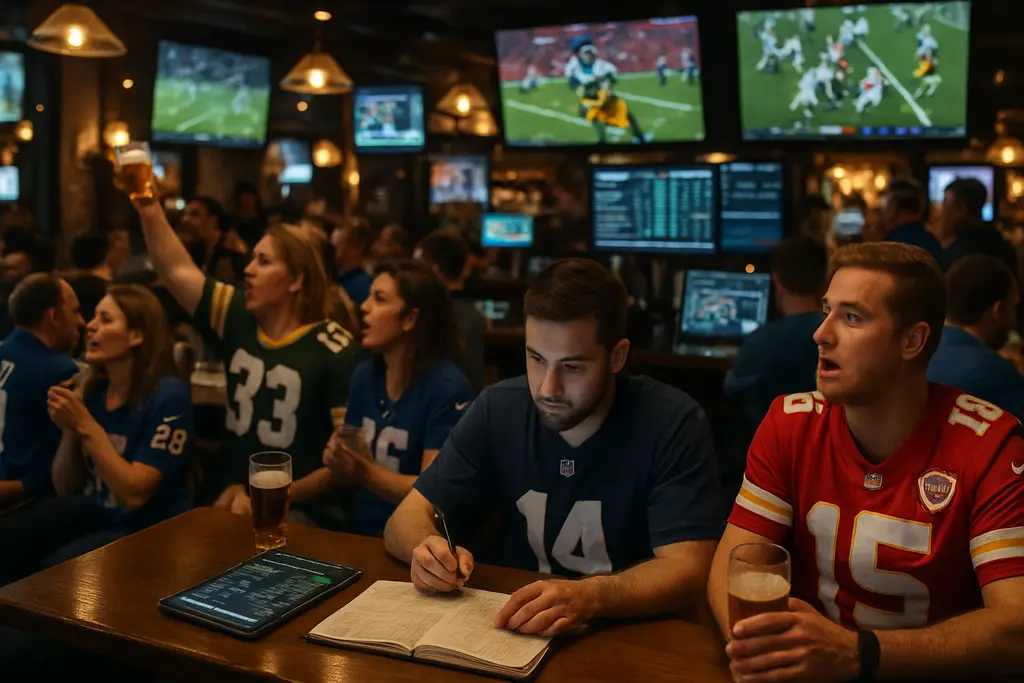
NFL handle is projected at $29.5 billion for the 2026 NFL wagering calendar, a figure that says less about any single game and more about a market that may be reaching a slower phase of growth. The American Gaming Association projection covers legal wagering through regulated sportsbooks across the preseason, regular season, playoffs, and Super Bowl LXI in February 2027, and it sits just above the $29.4 billion estimate for the 2025 season, according to the AGA projection.
That flat year-over-year reading matters because football remains the anchor event for many U.S. sportsbooks. A market can still be large while losing momentum. For readers comparing operators, the practical question is not whether a forecast creates a betting edge. It does not. The more useful read is how market depth, pricing, access rules, product design, and regulation may shape the experience around NFL betting in 2026.
Why NFL handle Growth Flattened In 2026
NFL handle Growth Has Paused
The $29.5 billion NFL handle projection is described as virtually flat compared with the prior season. The research also states that this is the first NFL betting season since the 2018 federal sports betting ban was overturned in which no meaningful legal sportsbook handle growth is projected. That is a notable shift for an industry that has often been discussed through expansion, new-state launches, mobile adoption, and national advertising.
A flat forecast does not mean demand has disappeared. It means growth is no longer automatic. The NFL still provides a long wagering calendar, with weekly regular-season games, playoff rounds, and the Super Bowl period. Yet a mature legal market can face limits. In states where mobile sportsbook access is already established, operators may be competing for share rather than finding large pools of brand-new customers.
Prediction Markets Are The Main Pressure Point
The research identifies prediction markets, including Kalshi and Polymarket, as the primary drag on projected growth. These products use event-contract style trading rather than the fixed-odds sportsbook model. That difference matters because sportsbook operators, state regulators, and market platforms may all view similar sports outcomes through different legal and commercial lenses.
For a bettor comparing products, the first distinction is structure. A regulated sportsbook posts odds and settles bets under state gaming rules where it is licensed. A prediction market presents contracts that can trade before final settlement, depending on liquidity and platform rules. Similar event questions can appear in both places, but they are not the same product. Contract wording, fees, age access, settlement criteria, and liquidity can change the practical cost of participation.
Readers who want a broader market comparison can pair this NFL discussion with our related note on prediction markets pressuring sportsbooks, where the same pricing and regulation issues are treated as market signals rather than picks.
Market Forces Around The NFL handle Projection
Regulation And Tax Differences Matter
One reason the debate is sharper in 2026 is that regulated sportsbooks and prediction markets do not appear to carry the same tax and compliance burdens. A report published by SCCG says AGA estimated that prediction markets have diverted more than $1.3 billion in potential state gaming tax revenue since the 2025 football season. The same report says users aged 18 to 20 contributed an estimated $5.1 billion of Kalshi sports betting volume, even though that age group is under the legal betting age in 35 of 40 jurisdictions where regulated sportsbooks are legal, according to the SCCG report.
Those figures are not just political talking points. They affect how operators price, advertise, verify customers, and build product menus. A regulated sportsbook may face state licensing costs, tax obligations, responsible gambling rules, age checks, and product restrictions. A prediction market operating under a different framework may compete for similar user attention without the same state-level structure. That gap is central to the 2026 discussion.
Sportsbook Depth Still Has Value
Even with pressure from event contracts, sportsbooks retain features that many NFL users understand: moneylines, spreads, totals, live markets, props, and account tools built around state-regulated sports betting. The value of those features depends on jurisdiction, operator, pricing, and the clarity of terms. None of that makes a wager safer or more likely to win; it simply changes the comparison process.
Price remains the first check. If two legal sportsbooks list different numbers on the same event, the difference can matter over time. Market depth is another check. A larger menu can be useful, but only if users understand the rules attached to each market. Live betting adds another layer because prices can move quickly during games, and delays, limits, or suspensions can affect what a bettor actually receives.
For widespread insights and comparisons across betting platforms, BettorSearch serves as a valuable reference, particularly for those exploring market access and operator details before committing to an account.
How Bettors Can Read The 2026 Market
Handle Is A Market Signal, Not A Pick
That makes NFL handle less of a prediction tool and more of a health reading for the legal betting sector. A high figure can show broad participation, but it does not tell anyone which side of a spread is mispriced. A flat figure can show competitive pressure, but it does not prove sportsbooks are suddenly weak or prediction markets are automatically better.
The better approach is to separate market structure from game opinion. Sportsbooks and prediction markets can both reflect public enthusiasm around major NFL events, but they express that demand in different ways. A sportsbook line includes operator margin, risk management, and customer strategy. A prediction contract may show market probability more directly, but spreads, fees, thin liquidity, and settlement terms can still reduce any apparent advantage.
Responsible Comparison Points
Anyone evaluating the 2026 football betting market should keep the comparison grounded. The key checks are practical, not promotional:
- Confirm whether the product is legal and available in the user’s jurisdiction.
- Review age rules, identity checks, fees, and withdrawal terms before funding an account.
- Compare prices across regulated operators where legal access exists.
- Read contract or market rules before treating event-contract pricing like sportsbook odds.
- Set personal limits and avoid treating market forecasts as betting instructions.
These checks do not remove risk. They can reduce confusion, especially in a year when the same NFL outcome may appear in several formats. A cautious bettor should be willing to pass when rules are unclear, pricing is thin, or the product does not fit their jurisdiction.
What The $29.5 Billion NFL Projection Means
A Large Market With More Friction
The projected NFL handle shows that legal football betting remains a major U.S. market, but the 2026 read is less about expansion and more about friction. Prediction markets are competing for attention. Regulators and operators are debating tax and access differences. Sportsbooks are still trying to defend their advantages in pricing, props, live betting, and regulated consumer protections.
The market lesson is simple enough: size does not equal certainty. A $29.5 billion forecast can describe broad activity without identifying value in any game. For sportsbook comparison, the sharper questions are where prices differ, how rules are written, whether a market has enough depth, and whether the product sits inside a clear legal framework. Those factors are more useful than treating a national handle projection as a signal to take a side.
Leave a Reply