

Welcome! If you’ve ever watched a match unfold and felt puzzled by the swirling odds and sudden momentum shifts, you’re in the perfect spot.
We’re here to demystify the dynamic world of live soccer betting together. This guide is your friendly coach on the sideline, breaking complex ideas into simple, actionable steps.
Just like a good team builds from the back, we start with the fundamentals. Why does wagering while the game is in play feel so tricky? Understanding the “state” of the match is your first key to smarter choices.
Is one team ahead and sitting back? Is the other pressing desperately? This game state dictates everything. We’ll explore how tempo swings and specific triggers create safer opportunities.
Let’s kick off this educational journey piece by piece. Get ready to see the pitch in a whole new way!
Why In‑Play Is Hard (Time Decay + Low Scoring)
Betting on a live soccer match is tough. It’s like a chess game where every second costs you money. Points are precious. Two big forces work against you from the start. We’ll explain them so you can see the game clearly, not just react to the chaos.
The first force is time decay. In chess, a “tempo” is an extra move, a big advantage. In soccer betting, the clock is your opponent. Every tick changes the situation. Odds can swing wildly in seconds after a near-miss or a big save. This constant pressure can make you rush.
The second force is soccer’s low-scoring nature. Unlike basketball or football, you might see only one or two goals in 90 minutes. This creates long stretches where the score doesn’t change, but the tactical battle is furious underneath. It’s easy to get impatient and make a move based on hope, not evidence.
Let’s compare these challenges side-by-side with traditional pre-match betting. Seeing the differences laid out helps explain why your strategy must change.
| Factor | Pre-Match Betting | In-Play Betting |
|---|---|---|
| Time Pressure | Minimal. You have days or hours to decide. | Extreme. Time decay means odds shift with every play. |
| Impact of Goals | All possible outcomes are open. | Each minute without a goal increases pressure; a single goal changes everything. |
| Odds Stability | Generally stable until team news or major events. | Highly volatile. Reacts to momentum, shots, and fouls instantly. |
| Required Mindset | Analytical and patient. | Disciplined and reactive. You must ignore the “vibes” and watch for real signals. |
So, what does this mean for you? The combination of time decay and a low-scoring sport creates a unique trap. You might feel the urge to bet because “something has to happen soon.” That’s usually a mistake! The game’s tempo isn’t about your frustration; it’s about real, measurable shifts in control and chance.
Understanding this is your first step to smarter live betting. Now that we see the why, we can start learning the when. Next, we’ll look at how game states like who’s leading or trailing completely flip the script.
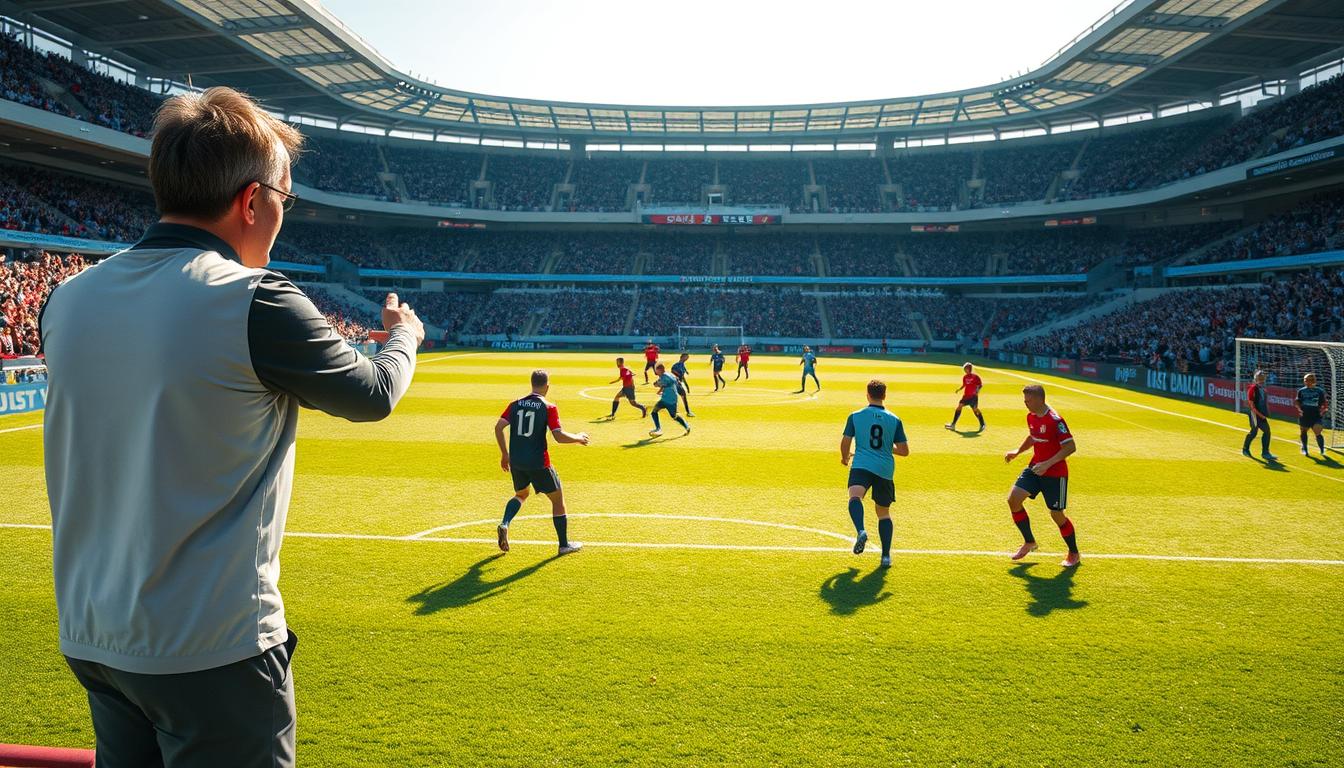
Game States: level vs leading vs trailing how tactics flip
Think of a soccer match as a series of mini-games, not one long game. A goal changes everything, rewriting the game plan.
The game state is key. It drives how a team plays. For in-play bettors, knowing these shifts is essential.
There are three main game states: level, leading, and trailing. Each state changes how a team plays.
At level scores, it’s a tense game. Teams are cautious, trying to gain an edge without risking too much. This is the basic state.
When a team is leading 1-0, they tend to play safe. They focus on defending, using a tight formation. This is to protect their lead.
Our source article shows a great example. Atletico Madrid plays defensively when leading. They use a 5-4-1 formation to keep the scoreline safe.
But, if a team is trailing, they take big risks. They push their defenders forward and attack more. This can leave them open to counterattacks.
Atletico Madrid also changes their tactics when trailing. They switch to a more aggressive formation, pressing hard. This shows how the game state can change tactics.
This changes how you bet on live games. The odds on “Next Team to Score” change a lot. A leading team is less likely to score again. A trailing team is more likely to score but also concede.
Knowing the state of the game helps you bet better. It lets you predict how teams will play. This turns random bets into informed choices.
Red Cards & Sub Windows: the only times to even consider acting
In a live match, most moments are just background noise. But, a red card is a clear signal to act. Think of soccer like checking the weather only during a hurricane. You save your energy for the big moments that change the game.
What are these big moments? They’re not just about scoring. They change the game’s feel and structure. These moments rewrite the match’s script.
A red card is a game-changer. It’s not just about playing with ten men. It changes the game’s geometry and psychology.
As the Kentucky Youth Soccer handbook notes, a red card affects the game’s spirit. The team with the card plays with defiance and desperation. The other team swings between confidence and caution. This creates unpredictable moments to watch for.
The substitution window is another key moment. It usually happens around the 60th minute. Coaches swap players to change tactics. A new striker can press the defense, while a defensive midfielder can secure a lead.
This window is volatile. The game state can change quickly. A team might go direct or drop back to defend. New players and ideas are a clear sign to reassess the game.
Here’s a simple way to remember it:
- Red Card: A sudden, seismic shock that changes everything space, tactics, and mindset.
- Substitution Window (~60th minute): A planned, strategic shift that injects new energy and instructions into the game.
These are the only times to consider in-play bets. They offer a clear reason for the game’s momentum to shift. Your bets are based on observable, high-impact events, not just a vibe.
When a trigger occurs, don’t rush. Take a breath. Think about how the change affects each team’s strategy. Is the leading team more likely to sit back or push for more? Is the trailing team forced to take more risks? Assess the new landscape calmly. This patience is key for strategic betting.
Safer Triggers: tempo + shots on target + field tilt, not vibes
Smart live bets come from using real, on-field signs, not just feelings. We’ve all had that gut feeling. But to win often, you need to look at what’s really happening.
Imagine a soccer team’s high press. They don’t just run; they watch for specific triggers like a risky pass. Your betting should be the same. Look for clear signs that one team is putting pressure, leading to chances.
Let’s look at the three safest triggers you can measure.
Trigger 1: Tempo (Forcing the Backward Pass)
Is the game fast-paced? Tempo is about control of the rhythm. When Team A makes Team B pass back often, they’ve got the upper hand. This is a sign of pressure building. The opponent is struggling, and mistakes are more likely.
Trigger 2: Shots on Target (Quality Over Quantity)
Not all shots are the same. A lot of long shots are just noise. Look for shots from close in, like inside the penalty area. These are the chances that really count.
Trigger 3: Field Tilt (Territorial Dominance)
Which team is in the opponent’s final third? This is field tilt. It shows which team is dominating. Dominance leads to more fouls and chances for late goals.
When you see these triggers together high tempo, quality shots, and field tilt you know pressure is building. This is how teams score late goals through hard work, not luck.
Your task is to spot these triggers. Is the tempo high? Are the shots dangerous? Is the game one-sided? If yes, you’re betting on solid evidence. This is how you bet smart, not just on hopes.

Markets to Prefer Early: totals and small AH over 1X2 long odds
The game starts, and while fans watch the action, smart bettors look for early betting spots. It’s like a coach choosing a strategy based on the opponent. Picking the right market early can set you up for success throughout the game.
Early on, we recommend Totals (Over/Under goals) and small Asian Handicaps. These markets reflect the game’s flow, like the tempo and shots. The 1X2 market, with its high underdog odds, is often a bad bet early.
The odds for an upset are usually bad early because of pre-match bias. The real game dynamics haven’t kicked in yet. By betting on Totals and Asian Handicaps, you’re focusing on the game’s style, not just who wins.
Let’s look at the differences between these early-game options:
| Market | Value Source (Early Game) | Typical Liquidity | Best For… |
|---|---|---|---|
| Totals (Over/Under) | Game tempo & attacking intent | Very High | Fast starts, open tactics, high pressure |
| Asian Handicap (Small, e.g., -0.5, +0.5) | Sustained field tilt & momentum | High | One-sided possession, tactical dominance |
| 1X2 (Long Odds) | Requires a major event (red card, early goal) | Lower (for the underdog) | Patience; better for later triggers |
The top two markets let you profit from what you see happening. The 1X2 underdog bet is riskier, needing a specific, unlikely event early on.
Totals and Asian Handicaps also offer liquidity. These markets are where lots of money is bet. High liquidity means fair, stable odds. For beginners, these markets are safer and more predictable.
Think of it like a busy market square versus a quiet alley. The square (high liquidity) has fair prices set by many. The alley (low liquidity) has prices that can change easily. You want to be in the square.
This is key if you’re learning totals trading strategies. Starting in a liquid market lets you focus on the game, not odd movements. Your decision is about soccer, not finance.
So, for the game’s start, keep it simple. Look at the Over/Under line. Consider a small Asian Handicap on the team showing more purpose. Leave long-odds 1X2 bets for later, if a big event changes the game. This focus on the right markets can give you an early edge.
Execution Rules: tiny size, one add max, no chasing late
Think of your in-play betting execution like a pilot’s pre-flight checklist it’s there to prevent disasters before they happen. The most brilliant game read means nothing if your betting actions are reckless. Let’s break down the three non-negotiable rules that will keep your bankroll safe while you learn.
When we say “tiny size,” we’re talking about stakes that feel almost laughably small. For beginners, this means 1-2% of your total bankroll at most. Why so small? In-play odds move fast, and even the best triggers can be wrong.
A tiny bet size does two wonderful things. First, it removes the fear of being wrong. You can watch the game unfold without sweating every pass. Second, it lets you make dozens of these practice bets. You’re paying for an education, not chasing a jackpot.
Rule 2: One Add Maximum Per Trigger
You see a team gaining momentum and place a small bet. Then they get another chance, and you’re tempted to add more. Here’s the rule: you get one add-on bet maximum for that specific trigger.
Think of it like seasoning food. You add a little salt, taste it, and maybe add one more pinch. You don’t keep dumping in the whole shaker! That one add is your “confidence adjustment.” Anything more is emotional betting, not strategic betting.
Rule 3: No Chasing When the Clock Is Ticking
This might be the hardest rule to follow. When a game enters the final 15-20 minutes, the betting window slams shut for smart players. Why? The time for tactical shifts has mostly passed. Desperate teams launch hopeful balls forward.
Chasing a late goal to salvage a bet is the fastest way to blow up your bankroll. The odds are terrible, and the emotional pull is strong. Your job is to recognize when the game has entered “garbage time” for betting purposes. Then you simply watch.
Let’s visualize how these execution rules play out in real scenarios:
| Execution Rule | Disciplined Approach | Undisciplined Approach |
|---|---|---|
| Stake Size | Bets 1.5% of bankroll ($15 on $1,000). Views it as paid learning. | Bets 10% ($100) trying to “make up” for earlier losses. Feels pressure immediately. |
| Adding to a Position | Sees a second strong chance after initial bet. Adds one more equal-sized stake. Then stops. | Keeps adding after each half-chance. Soon has 5x the intended exposure on one game. |
| Late-Game Mindset | Down 1-0 in the 80th minute? Accepts the loss. Watches the finish without betting. | Throws “just one more” bet at long odds for a last-gasp equalizer. Loses twice. |
These execution rules work together as a system. The tiny size makes the one-add limit painless to follow. Following both makes it much easier to resist late-game chasing. You’re building a habit of emotional control.
Remember, your goal isn’t to win big on one magical Saturday. It’s to stay in the game, learning and growing, months from now. Disciplined execution is what separates long-term students from short-term casualties in the live betting arena.
Stick to these rules even when your gut screams differently. That’s how you turn fleeting excitement into sustainable skill. You’ve got this!
Post‑Game Log: what signal actually mattered
Your betting journey doesn’t stop when the game ends. It keeps going with your post-game log. This tool helps you learn by asking a key question: what was the real signal?
Don’t just look at scores. Note the exact moment before a goal. Was it a strong press or a key player getting hurt? Kentucky Youth Soccer teaches us to learn and be patient. Your log does the same for betting, helping you understand yourself better.
Top coaches study game tapes to find these signals. You can learn from them too. A look at a football playbook analysis shows how they break down key moments.
This habit completes your betting rules. It keeps your bankroll safe by avoiding big risks. The post-game log sharpens your mind. You start to see real patterns and ignore random noise. Together, we build your discipline, making every game a lesson.
Leave a Reply