

NFL Betting Laws are not just background policy during the 2026 NFL season. They affect where bettors can legally open accounts, which products appear on regulated apps, how prediction markets are treated, and how operators may respond to new tax or compliance costs. None of that points to certain outcomes on the field, but it does shape the market around every Sunday slate.
As of October 10, 2026, the U.S. system remains uneven. The research notes show that 39 states plus Washington, D.C., have legalized sports betting in some form since the 2018 Supreme Court decision in Murphy v. NCAA. Yet online access is still limited by state borders, with about 61% of the U.S. population having access to online sports betting according to Rush Street Interactive’s annual report RSI annual report. That gap matters during NFL weekends because two bettors watching the same game may face completely different legal options depending on location.
Why NFL Betting Laws Vary By State
NFL Betting Laws And Access Gaps
NFL Betting Laws operate through a state-by-state model, which is why the market can feel fragmented. A bettor in a legal online state may see mobile moneylines, totals, player props, same-game markets, live betting, and account-level responsible gaming tools inside regulated apps. A bettor in a state without legal online sports betting may have no licensed mobile option at all.
California and Texas remain major examples in the research notes of large states without legalized online operations. That does not simply reduce convenience. It changes market depth, advertising reach, operator competition, and the number of legal products available to NFL viewers in those states. The same national schedule can create different consumer experiences from one jurisdiction to another.
For careful comparison, bettors should separate three questions. First, is online sports betting legal in the state where the account is being used? Second, is the operator licensed under that state’s framework? Third, are the specific markets being offered covered by the state’s rules and the operator’s terms? Those checks are not exciting, but they are more useful than treating every betting app or exchange-style product as interchangeable.
Online Access Is Not The Same As Product Equality
Legal access does not mean every bettor sees the same menu. States can differ on tax rates, licensing structures, college restrictions, advertising rules, payment options, and responsible gaming requirements. Operators can also make state-specific product decisions based on regulation, tax burden, demand, and risk controls.
That is why an NFL game with heavy national interest can produce different betting experiences across states. One app may post deeper player-prop menus in a mature market. Another may reduce promotions or adjust pricing strategy where taxes are higher. Some markets may be unavailable because of state rules or operator policy. None of those differences predict the result of the game, but they can affect the price a bettor is evaluating.
Tax Changes And Sportsbook Pricing Signals
What Higher Operator Costs Can Mean
The 2026 legislative cycle, based on the research notes, has been less about opening brand-new markets and more about tax changes, oversight, and consumer protections in states that already allow sports betting. North Carolina was one example: Senate Bill 257, signed on July 7, 2026, raised the tax rate on online sports betting from 18% to 23% of gross wagering revenue and added a 6% tax on net trading-fee revenue for prediction-market platforms beginning January 1, 2027.
Colorado also moved toward new restrictions effective later in 2026 after sports betting handle reached a record $6.4 billion in the prior fiscal year, according to the research notes. The law included new oversight powers for regulators. For bettors, the practical takeaway is not that any one operator will price a market in a predictable way. It is that rising compliance and tax costs can become part of the commercial equation behind odds, promotions, market availability, and account rules.
Sportsbooks do not publish every internal pricing decision. Still, bettors can compare visible signals: whether odds differ across licensed operators, whether live markets pause more often, whether props carry wider pricing, and whether promotions become more limited in a given state. A related site, Amazing Sportbooks, offers a useful point of comparison for operator features, but users should verify access and terms specific to their state.
- Compare regulated operators by price, market menu, cash-out terms, and responsible gaming tools.
- Check whether state rules limit certain bet types or product features.
- Review taxes and regulatory changes as possible market-cost signals, not as betting predictions.
- Avoid treating promotions as value without reading terms, expiry rules, and eligibility limits.
Prediction Markets And The NFL Season
Court Rulings Created Real Access Uncertainty
Prediction markets became a major pressure point around the 2026 NFL season. The research notes say the NFL reported $1.8 billion in trading volume on prediction markets on only the first Sunday of the 2026 season. That figure helps explain why regulators, leagues, operators, and bettors are paying attention to the boundary between event contracts and sports wagering.
Minnesota offered one clear example of uncertainty. A first-in-the-nation law banning prediction markets was temporarily blocked by a federal judge on July 28, 2026, shortly before it was to take effect, according to the Associated Press Minnesota ruling. As of October 10, 2026, the research notes describe Minnesota’s ban as being in legal limbo.
Other state-level conflicts also developed. The research notes say a federal appeals court in San Francisco ruled in late August 2026 that Nevada could regulate Kalshi under state gambling law. A Ninth Circuit ruling on August 28, 2026, also addressed Arizona and Kalshi, giving Arizona a win by affirming state authority to enforce gambling laws in the face of prediction markets.
Sportsbooks And Exchanges Are Not The Same Product
A licensed sportsbook and a prediction-market platform can both present prices tied to sports outcomes, but the structure is different. Sportsbooks usually set fixed odds and manage risk as the house. Prediction markets are generally built around contracts and trading activity. That difference can affect fees, exits, liquidity, settlement rules, and the user’s risk profile.
For NFL bettors, the main issue is not whether one format sounds more modern. The issue is whether the product is legal in the user’s location, whether the market has enough liquidity, whether rules are clear, and whether the price still makes sense after costs. Thin markets can look appealing on screen but become difficult to enter or exit at the expected price.
Readers comparing sports wagering and event-contract models may also find value in reviewing how sports prediction markets differ from traditional sportsbook odds. The comparison should stay grounded in regulation, product terms, and risk controls rather than assumptions that any format is automatically better for bettors.
NFL Integrity Rules And Bettor Context
Player Policy Affects Trust, Not Picks
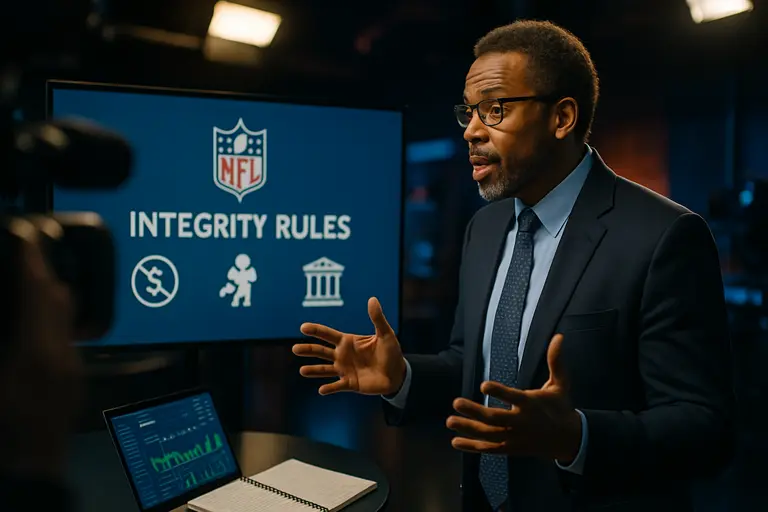
The NFL’s internal gambling policy was updated in 2026, according to the research notes. Betting on NFL games now results in a minimum one-year indefinite suspension, or two years if the bet involves the player’s own team. Lifetime bans apply for fixing games. Penalties for wagering on other sports while on work premises were reduced, including a first offense of two games without pay. Those policy amendments led to the reinstatement of wide receiver Jameson Williams and offensive lineman Nicholas Petit-Frere.
For bettors, league policy is best understood as an integrity signal, not a handicapping shortcut. Stronger rules can shape trust in the market, reduce obvious conflicts, and clarify consequences for insiders. They do not remove uncertainty from injuries, officiating, weather, coaching decisions, or player performance.
The NFL also extended its partnership with Genius Sports as its exclusive official data feed partner through the end of the 2027-28 season, according to the research notes. Official real-time stats and video products such as “Watch and Bet” are part of the legal betting ecosystem. That matters because live betting depends on speed, accuracy, and settlement clarity. Even with official feeds, live prices can move quickly and may differ by operator.
Responsible Evaluation Of NFL Betting Laws
Market Comparison Should Come Before Opinion
NFL Betting Laws should be part of every market review during the 2026 season. A bettor comparing Sunday prices is not only comparing teams, quarterbacks, injuries, and weather. The bettor is also comparing legal access, operator rules, state restrictions, taxes, data quality, and product depth.
The careful approach is to treat regulation as context, not as a path to certainty. A legal sportsbook can still post a poor price. A larger market can still be inefficient for a short period. A prediction market can still be thin, costly, or legally uncertain in a given state. A promotion can still carry terms that reduce its practical value.
NFL Betting Laws also remind bettors that jurisdiction matters. What is allowed in one state may be restricted, taxed differently, or unavailable in another. During the NFL season, that patchwork can affect account access, market menus, and how operators handle live pricing. Careful bettors should verify the rules where they are, compare regulated options without assuming certainty, and keep bankroll and time limits separate from game-day emotion.