
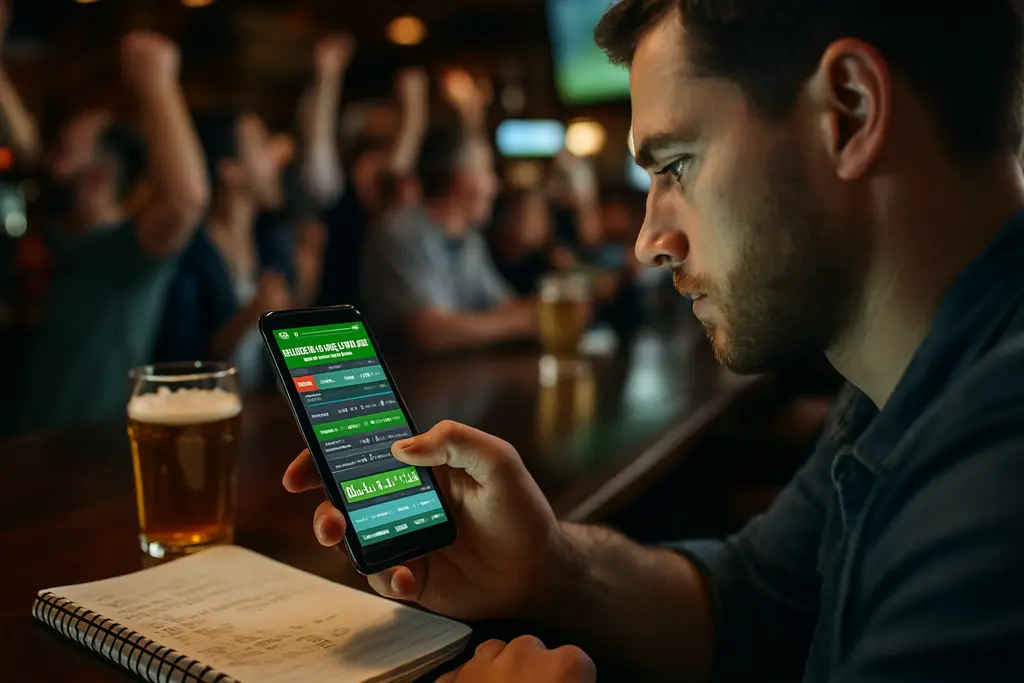
Live betting prices can look simple on the screen: a moneyline changes, a total moves, a prop appears, and the bet slip updates. The hard part is that the number is not only a view of the game. It also reflects sportsbook margin, feed speed, trading limits, bet-delay rules, and the operator’s view of risk.
That makes live betting different from pre-match betting. Before a match starts, sportsbooks usually have more time, deeper reference markets, and less immediate risk from sudden game events. During play, every possession, pitch, point, card, injury, timeout, or substitution can force a quick repricing. A bettor sees one price; the operator is managing a moving market.
This is not a case for treating any price gap as a certain edge. Price discrepancies can be real, but they may also come with hidden costs: worse margin, delayed acceptance, suspended markets, lower liquidity, or a stale stream. For readers comparing sportsbook products, related market resources such as Amazing Sportsbooks can be useful as part of a broader review process, but the same caution applies everywhere: compare rules and prices, not only app design.
Why Live Betting Prices Differ
Live Betting Prices And Margin
The first reason prices differ is margin. A sportsbook price includes an implied probability plus the operator’s built-in hold. Research on in-play operator economics reports that live sportsbook markets often carry margins in the 7% to 12% range, while pre-match markets more commonly sit around 4% to 6% according to Track360. That difference matters because a bettor can be correct about the direction of a game and still be paying too much for the position.
The wider in-play margin is not random. Live markets are harder to manage. A bookmaker must process event data, adjust to the scoreboard, react to injuries or tactical changes, and protect against users who may have faster information. In a pre-match market, price discovery has more time to settle. In a live market, a single play can make the previous quote obsolete.
That is why live betting prices should be read as a cost of access, not just a prediction. A number that looks attractive compared with another sportsbook may still carry a bigger hold than the pre-match version of the same market. The bettor’s task is not to find a perfect number. It is to understand whether the price being offered is fair enough for the uncertainty and friction attached to it.
Props Usually Carry More Friction
Player props and other micro-markets often carry wider margins than sides or totals in live betting, based on the same operator-economics analysis. That is easy to understand from the sportsbook side. A side or total market may have more liquidity and clearer reference points. A player prop can depend on usage, rotation, foul trouble, injury status, tactical choices, and the pace of the game.
For bettors, the practical lesson is simple: not all markets deserve equal comparison. A live main moneyline, a live total, and a live player prop may all appear in the same app, but they are not priced with the same difficulty or cost. Prop variety can make a sportsbook feel deeper, yet variety alone does not mean better value. A long menu can include prices that are expensive to take, especially during fast-changing match states.
Latency And Live Betting Prices
The Stream Is Not Always The Market
Latency is one of the least visible costs in live betting. A bettor may think they are reacting to the match in real time, but the stream may be several seconds behind the actual event. SBC News reported that many streaming services commonly run with a 5-8 second delay, and that delay can create stale-price risk, force sportsbook suspensions, or lead to delayed bet acceptance as SBC News explained.
That delay changes how live betting prices should be interpreted. A price may move before the bettor sees the reason on screen. A market may disappear just as the bettor tries to act. The bet slip may refresh, reject, or ask for confirmation at a worse number. These are not side issues. They are part of the true cost of betting live.
Latency can also create a false sense of control. Watching the game can make a bettor feel informed, but if the sportsbook and its data provider are ahead of the stream, the bettor may be reacting after the market has already adjusted. That does not mean live betting is unusable. It means the screen should not be treated as a faster information source than the operator’s feed.
Suspensions And Bet Delays Are Risk Controls
Live suspensions often frustrate bettors, especially around dangerous attacks, red-zone possessions, break points, penalties, pitching changes, or late-game clock situations. From the operator’s view, those pauses are risk controls. If a key event may have happened or is about to happen, leaving a stale price open could expose the book to trades based on better information.
That creates an uneven experience across operators. One sportsbook may reopen a market quickly with a wider margin. Another may hold the market longer but return with a more stable quote. A third may keep the market open but use bet delays and price-change confirmations. The best interface is not always the best price, and the fastest acceptance is not always the fairest cost.
How Bettors Can Compare Operators Carefully
Read Price Gaps Before Reading Predictions
Sportsbook comparison is often framed around bonuses, app speed, or market count. Those features matter, but live betting requires a sharper look at price behavior. If two operators show different numbers on the same live total, that discrepancy may reflect margin, data timing, liability, or a genuine difference in model output. It should not be treated automatically as a signal that one side is mispriced.
A careful comparison can start with a few repeatable checks:
- Compare the same market across more than one regulated sportsbook before assuming one number is attractive.
- Watch whether the bet slip accepts the displayed price or frequently returns a worse updated price.
- Separate main markets from props, because prop margins and liquidity can differ sharply.
- Notice whether live markets are suspended during key moments or merely delayed.
- Check house rules for voids, settlement, abandoned events, and player-participation conditions.
For football bettors, the same idea applies to match flow after major events such as a first goal. A useful related discussion is how live football markets can overreact when the scoreboard changes, although any price move still needs to be weighed against margin and timing.
Market Depth Is Not Just Market Count
A sportsbook may advertise a large live menu, but market depth depends on what is actually tradable at reasonable cost. A long list of props with high margin, frequent suspension, and low limits may be less useful than a smaller menu with steadier prices on sides and totals. Depth also changes by sport. Fast sports with frequent scoring chances can be harder to price than slower events with more natural stoppages.
This is where bettor discipline matters. The question is not “Which app has the most options?” The better question is “Which app gives clear, timely, and consistently priced markets for the bet type being compared?” That answer may vary by sport, league, and even by the phase of the game.
Pre-Match Prices Versus In-Play Costs

The Same Opinion Can Have A Different Cost
A bettor may like the same team before kickoff and again after ten minutes. The opinion may be similar, but the cost can be very different. Pre-match markets usually have more settled information and lower operator urgency. In-play markets have fresh game-state information but often higher margin and more friction.
That trade-off is central to understanding live betting prices. Waiting for the game to start can give more information, but the sportsbook may charge more for that information through wider hold, shorter windows, and tighter controls. Betting before the match may mean less game evidence, but the market may be calmer and cheaper.
Neither route is automatically better. A bettor who values confirmation from match flow should account for the extra live cost. A bettor who prefers pre-match pricing should accept that lineups, tactics, or game tempo may differ from expectations. The price is only one part of the decision, but it is the part that often gets overlooked.
Why Discrepancies Are Not Automatic Edges
A discrepancy between sportsbooks can be tempting. One book shows a better moneyline. Another hangs a higher total. A third leaves a prop open after others suspend. But a price gap alone does not prove value. The discrepancy may exist because one operator has not refreshed, because the market is about to suspend, because the bet will be delayed, or because the apparent price will change before acceptance.
Responsible comparison means treating discrepancies as questions rather than answers. Why is this number different? Is the market liquid? Has the game state changed? Is the stream delayed? Does the bet slip hold the number? Are house rules clear? If those questions cannot be answered, the gap may be more risk than opportunity.
Reading Live Betting Prices With Care
The clearest way to use live betting prices is to see them as market signals with costs attached. They express a sportsbook’s current view of probability, but they also include margin, risk controls, data timing, and product design. The number on the screen is not a neutral forecast.
For bettors comparing operators, the practical edge is not a promised win. It is better process: compare prices, understand margin, respect latency, read rules, and avoid treating every discrepancy as a mistake. Live betting can add useful context during a match, but it can also punish rushed decisions because the market moves faster than the viewer often realizes.
A careful bettor does not need to reject live markets. The better approach is to slow the decision down where possible. Track how often prices refresh. Notice which markets carry the most friction. Compare main markets separately from props. Treat delayed acceptance as part of the price. In live betting, the cost of being late, even by a few seconds, can matter as much as the opinion itself.
Leave a Reply