

The NBA Prediction Markets agreements announced on October 26, 2026, changed how the league worked with exchanges and a longtime sportsbook partner. The NBA paired a regulatory agreement with commercial deals that gave operators different rights, and its November 19 agreement with Novig made those differences easier to see. The useful distinction for readers is between league branding, permission to offer particular contracts under the framework, and the quality of an individual market. The first two were addressed by the agreements, but neither established that an operator offered a better price, better access, or better terms than a competitor.
How NBA Prediction Markets Came Under a League Framework
What the October 26 Agreement Covered
On October 26, 2026, the NBA entered into a memorandum of understanding with the U.S. Commodity Futures Trading Commission, or CFTC, to jointly oversee prediction markets tied to the league. The NBA’s October announcement also named Kalshi and Polymarket as Preferred Prediction Market Exchanges and described the expanded DraftKings relationship. Those were distinct pieces of the same announcement: the memorandum addressed oversight, while the deals with operators addressed commercial rights and integrity obligations. A league logo on a platform could reflect a commercial permission, but it would not, by itself, show whether suspicious activity in a particular contract was detected or reviewed.
The October deals limited the types of markets Kalshi and Polymarket could offer under the framework and required the exchanges to share information about suspicious or irregular trading. They also barred league and team personnel from trading contracts tied to NBA events. The safeguards addressed different questions: which contracts belonged on the menu, which people could participate, and what information operators had to share if activity raised concerns. That distinction matters because restricting the menu does not remove the need to monitor trades in permitted contracts. The agreement set out the obligations, but the announcement did not demonstrate how they worked in individual cases.
Sportradar was the route through which Kalshi and Polymarket received access to official NBA event data. For someone reading a contract, the official source and the settlement wording answer different questions: the first identifies where the event data come from, and the second specifies what result counts. Two listings tied to the same NBA game would not necessarily be equivalent if they defined the outcome differently. The practical comparison starts with the wording of the contract or sportsbook market before moving to price. Shared access to league data did not, on its own, establish identical terms across products or operators.
What Each Operator Got From Its NBA Deal
Kalshi and Polymarket received rights to use NBA intellectual property, including logos, and to run promotional activations as preferred exchanges. Novig became the league’s fourth authorized prediction market partner on November 19, 2026, but its arrangement drew a different line: it could advertise during NBA broadcasts without using NBA marks or logos on its platform. Novig also took on enhanced integrity obligations, so its narrower branding rights did not mean it was outside the league’s integrity framework. The difference matters because an ad seen during a game and a league mark displayed in an app reflect separate commercial permissions.
| Operator | NBA Relationship | Commercial Rights Described |
|---|---|---|
| Kalshi | Preferred Prediction Market Exchange | NBA intellectual property, promotions, and official data access |
| Polymarket | Preferred Prediction Market Exchange | NBA intellectual property, promotions, and official data access |
| DraftKings | Expanded official sportsbook partnership | Prediction markets and nationwide promotion of those offerings |
| Novig | Fourth authorized prediction market partner | NBA broadcast advertising, but no NBA marks or logos on its platform |
DraftKings stood apart because it already had an official sportsbook relationship with the NBA. The league expanded that partnership to include prediction markets and nationwide promotion of those offerings, rather than describing it in the same terms as the preferred-exchange deals. Nationwide promotion and nationwide availability are separate claims: the first describes the commercial arrangement, while the second would require evidence about where users could access a specific product. The announcement also did not establish that a DraftKings sportsbook market and a prediction-market listing on the same game would have the same terms. The shared operator name is not enough to make that comparison.
The Kalshi, Polymarket, and Novig agreements were multi-year, but their financial terms were not publicly disclosed. That confirmed the partnerships extended beyond their October and November announcements without giving readers a basis for ranking the amounts involved. Kalshi and Polymarket received branding rights that Novig did not, but broader branding permissions do not tell readers which deal cost more or which platform recorded more trading. Nor did the partnership labels establish how easily someone could enter or exit a particular market. The table can distinguish announced rights; it cannot rank the operators as places to take on financial risk.
How Trading Restrictions Applied to NBA Personnel
NBA Prediction Markets and the Kalshi Shareholding
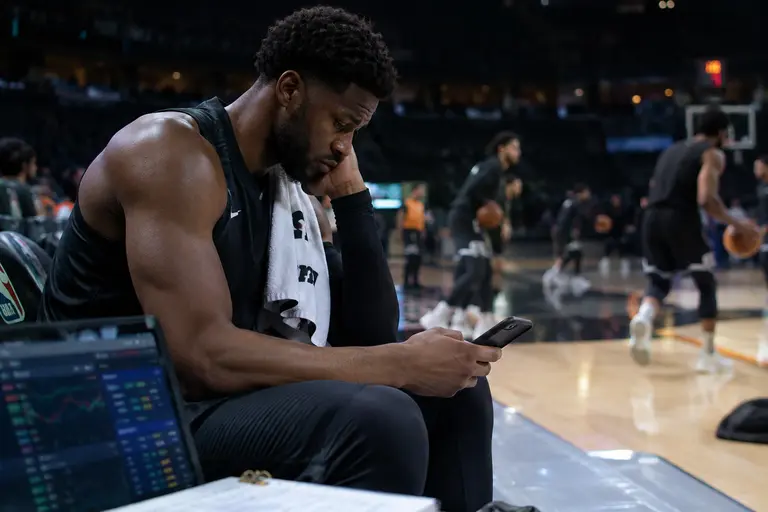
In February 2026, Giannis Antetokounmpo became a shareholder in Kalshi and agreed not to trade in NBA-related markets, according to Associated Press reporting. That agreement preceded the October framework and was separate from the league’s commercial designation of Kalshi as a preferred exchange. The distinction is between holding an ownership stake in the business that runs the exchange and taking a position on an individual NBA event contract. A restriction on the latter does not make the former disappear, and the reported ownership stake was not evidence that Antetokounmpo traded on an NBA outcome. Keeping those points separate avoids drawing a stronger claim than the reporting supports.
The October framework addressed trading conduct more broadly by barring league and team personnel from trading contracts tied to NBA events. That restriction did a different job from the limits on market types: a contract could be permitted under the framework while particular people were still barred from trading it. The prohibition was also distinct from the operators’ obligation to share information about suspicious activity. Sharing information gives the league and operators a way to scrutinize activity, but a report is not by itself a finding that someone broke a rule. The announced safeguards are best read as separate controls, not as interchangeable signs that every listed market is fair.
For NBA Prediction Markets, the league’s ability to determine which event contracts its partners could offer made the available menu part of the integrity discussion. A reader comparing coverage of a single NBA game should not assume that a player prop listed at a sportsbook had an exchange equivalent, even if both products were associated with the league. The relevant question is what each listing actually covered, rather than whether both apps featured the same matchup. The announcements did not provide a game-by-game comparison of contract menus, so they cannot settle which product offered more choices for any particular game.
What the NBA Deals Meant for Sportsbook Comparisons
The agreements gave readers more information about who supplied official data, what limits applied to partner exchanges, and where NBA branding could appear. They did not supply a matched set of sportsbook odds and exchange prices for a specific game. A useful sportsbook and prediction market comparison would start with equivalent outcomes and matching settlement terms, then examine the prices available at the same point in time. If one quote came from before a lineup announcement and the other came afterward, the difference would not isolate the effect of the operator or product. The deals themselves offered no basis for calling either format cheaper.
Market depth is a separate question from the price first displayed. An exchange quote is less informative for comparison if there is little available at that price, and a sportsbook listing says nothing by itself about whether the same terms will still be offered later. The distinction is especially useful in a live game, where a quote observed at one stoppage is not a clean comparison with a quote observed after play resumes. Neither the October 26 announcement nor the November 19 Novig agreement provided live prices or depth for an individual matchup. They changed the terms of the league’s relationships, not the evidence required to judge a specific quote.
The most durable reading of the NBA deals is that league affiliation became easier to identify, while the work of comparing products remained with the reader. For related insights in the sports betting field, 1X2 Betting Pro is a related site in the same network. The operator’s own terms are still the place to check how a particular listing is defined. A logo, a broadcast advertisement, and a familiar sportsbook name can all draw attention to a product, but none resolves questions about access, settlement, or what a price represents. Where those details cannot be verified, there is no sound basis for a like-for-like comparison.