
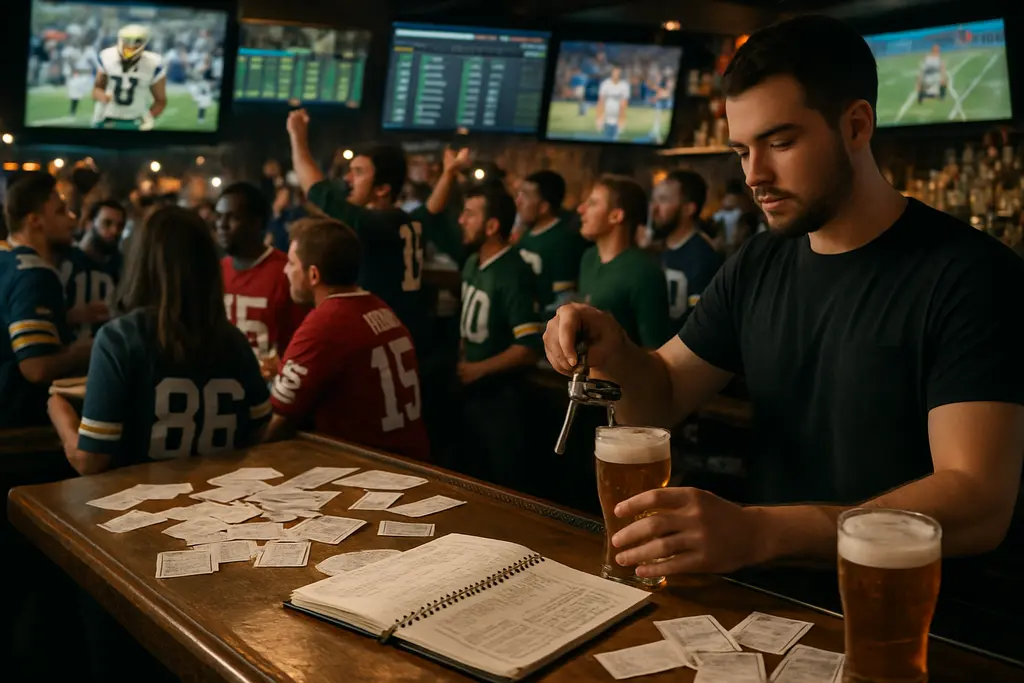
Retail Sports Betting has moved from a visible symbol of U.S. legalization to a smaller share of activity in several major markets. The change does not mean physical sportsbook lounges are disappearing everywhere, but the data through September 25, 2026 shows a clear pressure point: bettors in large states are placing far more of their volume through online channels than at counters or kiosks.
That matters for anyone comparing sportsbooks, because retail and online betting are not just different access points. They often differ in menu depth, live betting availability, prop variety, price movement, and the practical cost of getting a wager placed. A bettor standing in a venue before a game may value atmosphere and cash transactions. A bettor comparing mobile prices may care more about speed, limits, markets, and line shopping. Neither route removes risk, and neither creates certainty.
Retail Sports Betting In Major Market Data
Retail Sports Betting Share Has Shrunk
The clearest data point comes from four large states: New York, New Jersey, Illinois, and Ohio. In those markets, retail handle declined about 26.7% year over year in the first half of 2026 compared with the same period in 2025, while online handle was nearly flat, up about 0.2%. In June 2026, retail accounted for $50.4 million of a combined $4.97 billion in handle across those four states, or 1.0% of total wagering, down from about 1.7% a year earlier, according to RG market research.
Those figures show a widening gap rather than a short-term dip. Retail volume can still appear meaningful in absolute dollars, but the share is small compared with online betting in the same states. For bettors, that means the most active markets, fastest odds changes, and broadest in-play menus are more likely to sit inside mobile products than at a physical counter. That is not a recommendation to use any specific product; it is a market-structure point.
State Reporting Shows The Same Direction
The reporting shift in New Jersey is notable. Starting with July 2026, the New Jersey Division of Gaming Enforcement stopped breaking out retail sportsbook handle as a separate monthly metric, citing lounge wagering as a small proportion of total handle. That type of reporting change can make trend tracking harder for analysts and readers, but it also reflects how marginal the category had become in that state’s public monthly release format.
Illinois and Ohio also followed the wider pattern. Illinois retail handle was about $55.4 million in Q2 2026, down from about $78.8 million in Q2 2025. Across the first half of 2026, Illinois retail handle fell about 21.3%, while online handle slipped only slightly. Ohio saw retail handle fall about 27.6% from H1 2025 to H1 2026, while online wagering was essentially flat at minus 0.2%. New York, which never built a large retail structure, saw its retail share fall from about 0.28% of total handle in Q1 2025 to about 0.10% by July 2026.
Why The Counter Is Losing Ground
Mobile Books Win On Speed And Menu Depth
The retail counter has practical limits. A physical sportsbook can post major sides, totals, futures, and some props, but it cannot match the same pace of menu changes that a well-run mobile product can offer. Live betting makes that gap more visible. During a televised NFL game, NBA game, college football Saturday, or major soccer match, mobile books can adjust markets constantly. A retail bettor may face lines that update less conveniently, longer queues, or a narrower set of available props.
Retail Sports Betting still has social value. A lounge inside a casino, racetrack, arena district, or stadium-adjacent venue can make a game feel communal. That experience matters to some customers, especially around marquee events. The issue is that atmosphere alone does not create handle at the scale operators need. If most bettors can compare markets from a phone, the physical site has to justify staffing, technology, rent, compliance work, and venue partnership costs.
Flagship Venues Face Harder Economics
The closure of DraftKings’ retail sportsbook at Wrigley Field in May 2026 is a useful example. The venue opened in March 2024 and shut after 26 months. It had the advantage of a famous sports setting, but the broader move toward mobile betting made the model harder to sustain. A high-profile address can attract attention, yet attention is not the same as durable betting volume.
That point matters for market comparison. A venue can be attractive on game day while still offering less flexibility than an online account. Bettors evaluating a regulated sportsbook should check whether the available markets match the event they care about, whether the price is competitive, whether cash-out or live features are clearly explained, and whether the rules are easy to find before any decision is made. For readers comparing broader market tools, visiting 1x2BettingPro provides insights as a related site within the same network, emphasizing betting context rather than certainty.
Advertising, Competition, And Demand Signals
Ad Growth Has Cooled Since The Early Boom
The retail decline is not happening in isolation. Sports betting advertising also cooled after the early legalization surge. In 2025, TV ad units for sports betting fell about 9% year over year and were down about 50% from their 2021 peak, according to the American Gaming Association. That does not prove lower demand by itself, but it does suggest operators became more selective about customer acquisition and brand spending.
For retail locations, softer advertising can be a headwind. Physical sportsbooks often need awareness, event traffic, and repeat visits. If operators spend less on broad promotion and steer customers toward digital accounts, the counter becomes more dependent on location and special-event interest. A stadium book may benefit around home games, but the rest of the calendar still needs enough activity to support the operating model.
Prediction Markets Add Another Comparison Point
Operators have also cited competition from prediction markets such as Kalshi and Polymarket as a pressure on the wider betting business. The research notes that BetMGM cut its outlook in July 2026 and attributed part of the constraint to competition from prediction markets. That point should be treated carefully: prediction markets, mobile sportsbooks, retail counters, and offshore sites are not identical products, and their regulation can differ.
Still, the comparison pressure is real. Price-sensitive users now have more ways to think about probability, fees, spreads, and access. A retail counter that offers fewer markets and less convenient price comparison may struggle to hold attention unless it provides a clear reason to visit. Retail Sports Betting is therefore competing not only with mobile sportsbook apps, but also with a wider set of event-based pricing products.
What Bettors Should Compare Before Using A Retail Book

Market Quality Matters More Than Venue Appeal
A physical sportsbook can be part of a good match-day experience, but bettors should separate the venue from the market. The useful questions are practical: Is the line the same as the operator’s mobile price? Are player props available? Are live markets open long enough to matter? Are house rules posted clearly? Are payouts, void rules, and settlement terms easy to understand?
That type of comparison is not about finding a guaranteed outcome. It is about reducing avoidable friction. A bettor who accepts a worse number simply because a counter is nearby may be paying for convenience without realizing it. A bettor who uses mobile prices as a reference point can at least see whether the retail option is competitive. The same careful approach applies to promotions; headline offers can carry restrictions, and terms should be read before they influence behavior.
Regulated Access Still Deserves Attention
Jurisdiction matters. Regulated sportsbooks operate under state rules, reporting requirements, and responsible-gaming standards. Offshore sites and unlicensed products may not offer the same protections or complaint channels. That distinction is especially relevant as physical sportsbooks lose share, because some users may search for alternatives without checking legal status or consumer safeguards.
Retail Sports Betting can still fit some users: cash-focused customers, visitors at casinos, and fans who enjoy a lounge environment may prefer it for certain events. The data does not say every retail book lacks value. It says the share of handle in several major states has become very small, and operators are reacting to that reality.
Retail Sports Betting And The Next Market Test
The next test for retail operators is not whether they can recreate the early legalization excitement. The more realistic test is whether they can define a narrow role that mobile products cannot fully replace. That role may be event-based, hospitality-driven, or tied to specific venues. It may also be smaller than operators once expected.
Retail Sports Betting remains visible, but visibility should not be confused with market strength. In New York, New Jersey, Illinois, and Ohio, the first-half 2026 data showed retail losing ground while online handle held far steadier. New Jersey’s reporting change reinforced the same point. Illinois and Ohio showed sizable retail declines. New York’s retail share was already tiny and became smaller by July 2026.
For bettors, the careful read is simple: compare access, rules, prices, and protections before treating any sportsbook format as better. A counter may offer atmosphere. A mobile book may offer deeper markets and faster comparison. Neither format removes uncertainty, and no market trend turns a wager into a sure outcome.
Leave a Reply