

Minnesota Prediction Markets became a national test case after federal litigation and a July 2026 court order stopped Minnesota from enforcing its broad prediction-market statute. For sports bettors and market watchers, the key point is not whether any event contract offers a better outcome. It is whether state lawmakers can treat these products like gambling while federal regulators treat at least some of them as derivatives.
That distinction matters because sports-event contracts sit close to sportsbook behavior from the customer side. A person may compare a contract price with a sportsbook moneyline, a futures market, or an event prop. Yet the legal structure, settlement rules, fees, and protections may differ. Readers should approach the issue as a market-access and consumer-protection question, not as a shortcut to cleaner predictions.
Minnesota Prediction Markets After The Injunction
Minnesota Prediction Markets As A Sports-Betting Signal
On May 19, 2026, the Commodity Futures Trading Commission and the U.S. Department of Justice sued Minnesota over SF 4760, described in the research record as a law that made operating or assisting prediction markets a felony; the dispute was reported as a federal challenge to Minnesota’s first explicit state ban of this kind by The Block. The suit placed the state’s police-power argument against the CFTC’s view that certain contracts fall within federally regulated derivatives.
The law was scheduled to take effect on August 1, 2026. On July 27, 2026, Judge Katherine Menendez of the U.S. District Court for the District of Minnesota issued a preliminary injunction blocking enforcement as of that effective date while litigation continued. The research record says the court found the plaintiffs likely to succeed at least in part on express-preemption claims and also found irreparable harm from enforcement.
The injunction did not settle the whole debate. It preserved access for covered entities during the case and signaled that broad state bans may face serious legal friction where federally supervised markets are involved. As of September 2, 2026, the research supplied for this article did not include a final ruling, so any analysis has to stay provisional.
Why The Effective Date Still Matters
Even though enforcement was blocked before August 1, the scheduled effective date still gave other states a practical timeline to study. A law can pass, operators can sue, federal agencies can intervene, and a court can stop enforcement before consumers experience the rule. That sequence can influence how lawmakers draft later bills, especially if they want to avoid language that sweeps in sports, politics, weather, government action, and other event categories all at once.
Why The Block Matters For Sportsbook Comparison
Price Is Only One Part Of The Comparison
The practical impact of Minnesota Prediction Markets is clearest when comparing sports-event contracts with regulated sportsbooks. A sportsbook posts odds, builds in margin, limits exposure, and offers familiar markets such as moneylines, totals, props, futures, and in-play prices where state law allows. A prediction market may present a price that looks like probability, but the user still has to account for spread, fees, liquidity, settlement terms, and the ability to exit a position.
That means a contract price should not be treated as automatically sharper than a sportsbook number. Thin order books can make entry and exit more expensive than the headline price suggests. A sportsbook, meanwhile, may have higher built-in margin but clearer bet settlement, state-regulated complaint paths, and responsible-gaming tools in legal jurisdictions. A careful comparison asks what is being priced, who controls settlement, and whether the market has enough depth near the event.
For a broader side-by-side frame, our related analysis of prediction markets vs sportsbooks explains why the same sports outcome can feel similar to users while operating under different rules. Readers interested in platform operations and trading infrastructure can also review sportsbook platform technology as part of the wider market context, offering insights into how these platforms are constructed for efficiency.
Live Betting And Props Are A Stress Test
Sportsbooks are strongest in areas that demand speed, depth, and clear house rules: live betting, player props, same-game combinations, and late news. Prediction markets can attract attention when a single event has enough demand, but sports schedules create uneven liquidity. A nationally watched playoff game may draw more interest than a lower-profile regular-season matchup. A market on an awards result, injury status, or coaching decision may be even more sensitive to contract wording.
This is why the Minnesota dispute reaches beyond one state. If states cannot broadly ban federally supervised contracts, they may still try to regulate sports-specific areas more narrowly. If courts allow state restrictions, operators may have to segment access by jurisdiction in ways that resemble sportsbook geofencing. Neither path gives bettors a simple answer. It changes what products appear, where they appear, and which rules govern them.
Inside Information Became A State Concern
State Employee Limits
After the injunction, Minnesota did not stop addressing the risk side of prediction markets. On July 28, 2026, Governor Tim Walz issued an executive order preventing state employees from using nonpublic information to trade on prediction markets, according to the governor’s executive action. That response narrowed the focus from a full operational ban to conduct by people who may have access to information ordinary users do not have.
For sports-market readers, the inside-information angle is familiar. Lineup changes, injury details, disciplinary issues, and weather information can move sportsbook prices. Prediction markets broaden that same concern into elections, government actions, legal outcomes, cultural events, and catastrophic events. If a market allows trading on public outcomes, private knowledge can become a fairness issue before the wider public understands why the price moved.
Responsible Evaluation Over Fast Reaction
Minnesota Prediction Markets also show why product access should not be confused with product suitability. A court block may preserve access to certain contracts, but it does not answer whether a user understands the rules, can afford the risk, or has compared the market responsibly. Event contracts can feel simple because “yes” and “no” are easy labels. The harder work is reading settlement criteria, costs, and restrictions before risking money.
That responsible frame is especially relevant for sports bettors who are used to quick app decisions during televised events. Speed can hide uncertainty. If the contract is thin, if the event definition is ambiguous, or if a late-information edge exists, the displayed price may not reflect the true cost of taking or leaving a position.
What Other Legislatures May Copy Or Avoid
Narrower Bills May Be More Likely
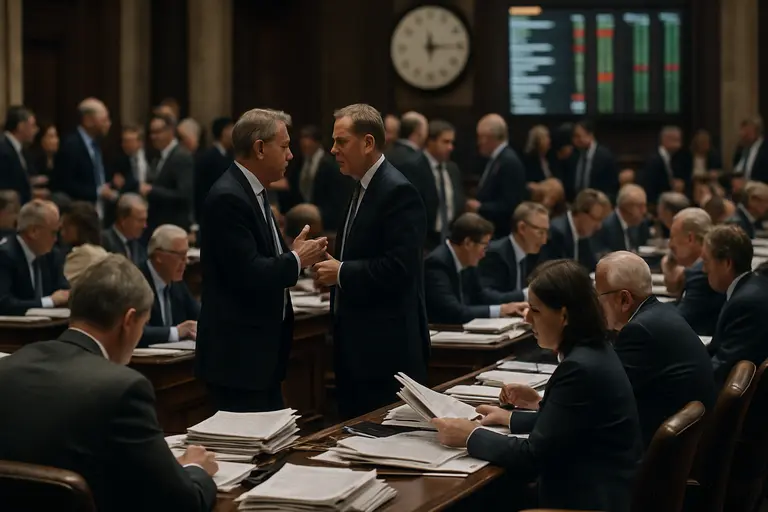
The Minnesota law was broad, covering creation, operation, management, facilitation, or advertisement of platforms for wagers on specified events. The categories included sports, elections, weather, governmental actions, and other event types described in the research record. Future legislatures may respond by drafting narrower bills aimed at specific categories rather than all prediction markets.
A sports-only restriction, for example, could be presented differently from a full ban on every event contract. A politics-only rule could be framed around election integrity. A public-employment rule could focus on nonpublic information rather than platform operation. None of those paths is free of legal risk, but each is more targeted than a felony statute that sweeps across many event classes.
Federal Preemption Remains The Pressure Point
The central legal question is whether state laws are preempted when they reach contracts the CFTC views as swaps under the Commodity Exchange Act. If a final ruling later supports Minnesota’s position, other states may gain confidence in aggressive restrictions. If the preemption argument prevails, lawmakers elsewhere may need to revise pending bans or write around federally supervised contract markets.
That uncertainty is part of the product experience. A bettor or trader may care most about price, but access can change because of litigation, state enforcement, operator restrictions, or federal rulemaking. A regulated sportsbook has its own limits and state-by-state rules, but users are usually dealing with a clearer gaming-law model. Prediction markets are still being tested at the border between financial regulation and gambling policy.
Minnesota Prediction Markets And Future Legislation
The blocked Minnesota statute gave other states a warning and a template at the same time. It showed that lawmakers can pass a broad ban with enough political concern behind addiction, manipulation, sports wagering, and election integrity. It also showed that federal regulators and market operators may challenge that approach before a law is enforced.
For sports bettors, the lesson is cautious comparison. Do not treat prediction-market prices as clean substitutes for sportsbook odds without checking liquidity, fees, access rules, and settlement language. Do not treat a court injunction as consumer approval of every product feature. And do not treat state concern as proof that every contract is harmful. The better reading is narrower: Minnesota’s block changed the legislative playbook, but the final boundaries between state gambling authority and federal derivatives oversight remained unsettled as of September 2, 2026.
Future laws are likely to be judged by how precisely they identify the risk they are trying to control. Sports-event contracts, political markets, government-action markets, and public-employee trading each raise different concerns. Minnesota made those questions harder for lawmakers to avoid, and the betting market will keep feeling the effects through access rules, product menus, and the way users compare prices before major events.
Leave a Reply