

In sports betting, the numbers on the board are always talking. Changes in the odds and point spreads create a constant stream of data. This isn’t just random noise—it’s the market speaking its own language.
Learning to interpret this language is your key to unlocking hidden insight. It shows you where the respected money is flowing and how overall sentiment is evolving. You gain a clear view of the game within the game.
For anyone making serious wagers, reading this data is non-negotiable. It’s the foundation for data-driven decisions. Think of it like a financial analyst studying stock charts for patterns and trends.
The full story is told in the journey from a line’s openers to close. Watching this evolution helps you gauge if your bet truly beat the market. Powerful, rapid shifts known as steam moves offer particular signals, which we’ll explore in depth.
Market Structure 101: Openers, Copycats, and Limits
Every point spread or moneyline starts as an Opening Line. This is the first price a sportsbook offers. Oddsmakers use rankings, algorithms, and data to set this number.
The opener is just the start. The final number before the event is the Closing Line. The journey from open to close shows the market’s story.
Not all sportsbooks are the same. Market-making books like Pinnacle or CRIS offer sharp, efficient lines. They attract pros. A line move here signals something.
Many sportsbooks are reactive. They watch sharp books and copy their moves. This is the “copycat” effect. A move at a sharp book spreads through the market.
Knowing who does what helps you understand moves. The table below explains the key players.
| Sportsbook Type | Primary Role | Action on Sharp Moves | Risk Management Focus |
|---|---|---|---|
| Market Maker (Sharp) | Sets efficient opening lines; attracts professional action. | Moves first based on betting intelligence. | Balances book through high limits and precision. |
| Copycat / Reactive | Services the general public; follows major markets. | Mirrors moves from sharp books after a delay. | Relies on following sharp moves to limit liability. |
| Public / Recreational | Caters to casual bettors; often has flashy offers. | May move slowly or on public money alone. | Uses lower limits and frequent adjustments. |
This leads to limits and resistance. Sportsbooks are businesses. They balance money on both sides of a bet. Too much on one side increases their risk.
To manage risk, they adjust odds. Making the popular side less attractive stops more bets. This is a direct use of their limits.
Sometimes, a line stops moving despite heavy betting. This is resistance. The book has decided the price is right. It will take the unbalanced action. Recognizing this resistance is key. It often means sharp money has stopped, or the book is very confident.
Understanding this is like learning the rules of the trading floor. You know who sets prices, why they change, and how limits shape odds. This is essential for reading the market’s next move.
Interpreting Move Types: Steam, Drifts, and Snapbacks
Sharp bettors see more than just numbers. They understand the story behind steam, drifts, and snapbacks. This knowledge helps them find value in the market.
Each movement type has its own unique mark. By recognizing them, you can turn abstract line changes into clear signals.
A steam move is a sudden, sharp line shift. It’s often caused by large wagers from respected bettors or syndicates. This movement suggests smart money has entered the market, applying heavy pressure on sportsbooks.
You must identify these steam moves quickly. Acting fast can allow you to get on the same side as the sharp action before the line settles.
A drift is the opposite in pace. It’s a slow, gradual movement over hours or even days. Drifts are typically tied to consistent public money or the slow absorption of news.
This pattern often indicates where the majority of casual bettors are leaning. A persistent drift can sometimes create value on the other side.
The snapback is a fascinating counter-move. After an initial shift, the line corrects back toward its original number. This can signal that the first move was an overreaction.
Snapbacks offer a second chance to bet a line that briefly disappeared. They are key moments for patient bettors.
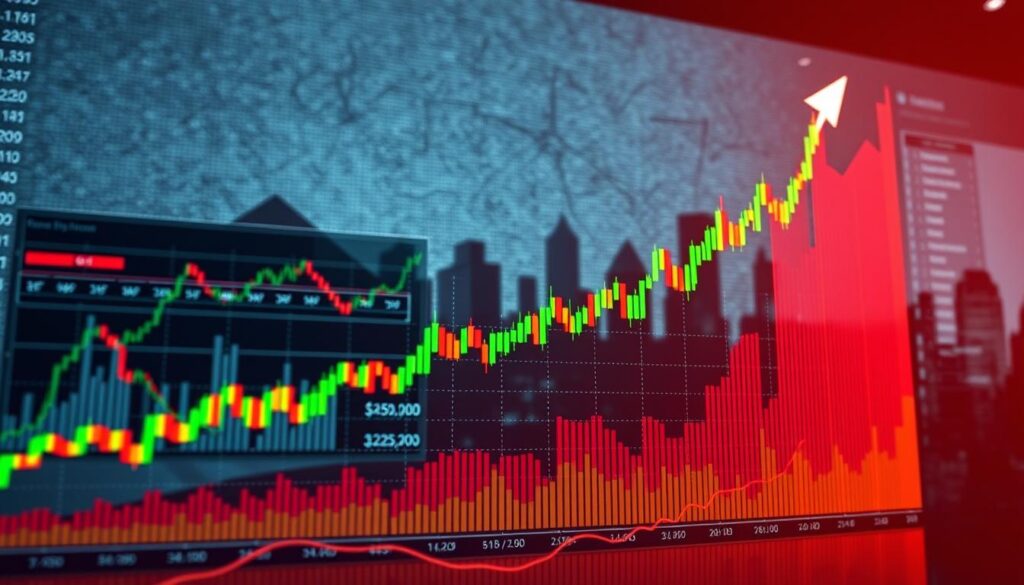
Understanding price history is how you visually spot these patterns. A chart tracking the line over time makes steam, drifts, and snapbacks obvious.
Look for these key patterns in the data:
| Move Type | Speed & Cause | Market Signal | Actionable Insight |
|---|---|---|---|
| Steam Move | Fast, sharp; Sharp money/syndicates | Respected opinion entering | Consider following quickly |
| Drift | Slow, gradual; Public money/news | Popular side is clear | Potential fade opportunity |
| Snapback | Corrective; Market overreaction | Initial move may be false | Wait for value to return |
Two related concepts are key. Reverse Line Movement happens when most public money is on one side, but the line moves the opposite way. This is a strong sharp money indicator.
Late moves just before an event start often reflect last-minute public sentiment or breaking news. They can be volatile and less reliable for forecasting.
Your goal is to use this price history analysis to make better decisions. Was that line change a meaningful steam move or just noise? The chart tells the story.
Using Price Histories and Alerts Effectively
To use line movement insights, track odds on platforms and set alerts. This turns theory into action. You’ll move from just watching to actively participating in the market.
Start by creating a detailed price history. This shows how odds change from start to finish. It uncovers patterns that numbers alone can’t show.
Many tools help track this data. OddsPortal gives basic charts for many sportsbooks. Betfair’s exchange graphs show deep market feelings. Premium sites like Action Network or Don Best offer advanced tracking.
Don’t rely on just one bookmaker’s odds. Compare prices from at least three to five books. Differences often show sharp money or mispriced lines. This is where you find value.
Set up smart alerts to watch your data automatically. Get alerts for:
- Specific movement thresholds (e.g., line moves 1.5 points)
- Arbitrage chances across books
- Key numbers in football or basketball
- Big steam or reverse line movement
These alerts save time and make sure you catch important moves. They turn constant watching into focused action.
Your tracking work links directly to closing line value (CLV). CLV is key for pro bettors. It shows your entry price against the final price at game time.
Getting a better price than the closing line means you bet smarter than the market. Regular positive closing line value shows a winning strategy. Your price history proves it.
Begin with one sport and league. Record opening lines from three books. Track big moves until game start. Note the final line. Then, calculate your CLV for any bets.
This method turns random betting into smart trading. You’ll know which books move first. You’ll tell real market shifts from noise. Your alerts will get better over time.
The goal isn’t to track everything. It’s to create a system that finds value. A focused price history with smart alerts gives you that edge. It turns data into useful information.
Football Key Numbers; NBA Total Bands; Tennis Overnight Moves
The importance of a half-point shift varies by sport. It depends on the key numbers that define each game’s scoring. To follow the journey from openers to close, you need to know each sport’s unique numbers.
General line movement rules are a start. But, knowing the sport-specific details is key. This knowledge helps you find closing line value consistently.
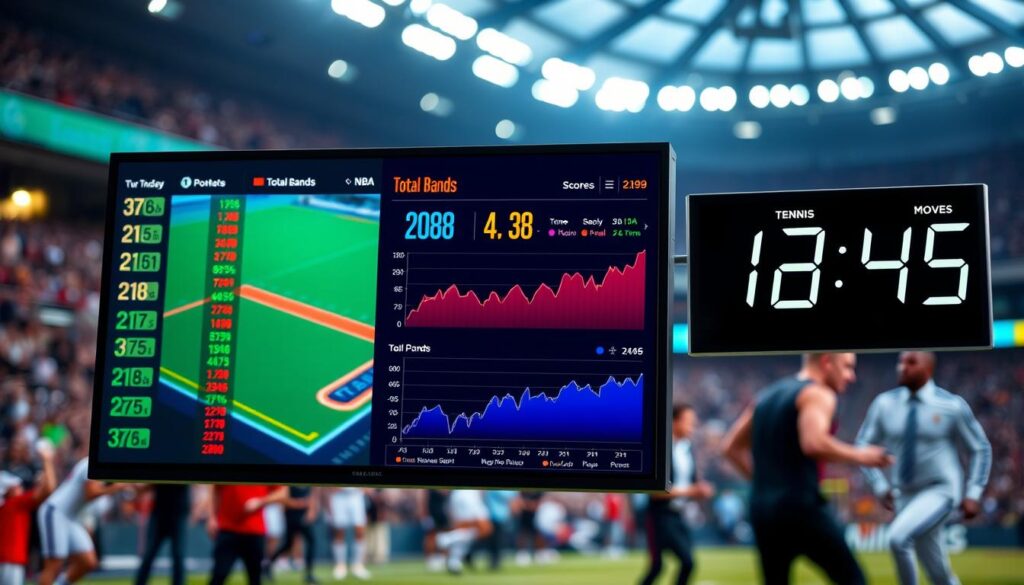
In American football, not all points are equal. Certain margins of victory happen more often. These are called key numbers.
The most critical numbers are 3 and 7. They relate to the value of a field goal and a touchdown with an extra point. A big move is from -2.5 to -3, affecting the bet on the key number of 3.
This change is more significant than a small shift from -5 to -5.5. Early on, sharp bettors aim to exploit these numbers before the public notices.
Watching these moves closely helps predict the closing line value. It often shows where the smart money is going.
NBA Totals and Scoring Bands
Basketball has its own rules. Totals (over/under) focus on ‘scoring bands’. Modern NBA games often fall within specific score ranges.
Scoring bands might be 210-219 points or 220-229 points. A shift from 217.5 to 219.5 is more than a two-point change. It’s moving into the heart of a new band.
This change shows sharp analysis of team pace, defense, and recent scoring. Knowing these bands helps you understand if a move is just noise or a real market shift from openers to close.
Tennis and the Overnight Move
Tennis is a global sport with betting markets across time zones. The ‘overnight move’ is a key phenomenon here.
Lines are set in Europe, then Asia and North America react. A big price shift while the U.S. sleeps is a strong sign.
This action is usually not driven by public opinion. It’s sharp or syndicate money making a move based on deep analysis. An overnight change in a tennis game spread often shows where international smart money is going.
Understanding these sport-specific details changes how you view the market. You move from seeing random numbers to reading a story of probability, sharp intent, and public reaction. This story unfolds from the first opener to the final close.
This deep understanding is key to securing long-term closing line value and making smart betting decisions.
Distinguishing News-Driven vs. Market-Driven Action
The skill in reading line movement is knowing the difference between news-driven and market-driven moves. Betting without understanding the cause is like traveling without a map. You might win, but you won’t build a lasting edge.
Every line shift has a reason. Your job is to find it. There are two main types of action: news-driven and market-driven. Knowing this is the first step to becoming a sharp bettor.
News-driven action is easy to spot. New information makes sportsbooks adjust their lines logically. The reason is clear and often reported.
Examples include a star quarterback’s injury, sudden weather changes, or confirmed lineup shifts. The market reacts fast. Books adjust the line to reflect the new reality, and public money often follows.
The move is a direct reaction to an event. There’s little mystery. But, betting on this news means you’re not alone, which can reduce value.
The Market-Driven Move
Market-driven action is where the real detective work starts. Here, the line moves due to smart money, not headlines. Sharp bettors place large, calculated bets based on their analysis.
This action can force books to move lines even when it creates a liability issue for them, testing their risk limits. A classic signal is reverse line movement.
Imagine 80% of bets are on Team A, yet the line moves to make Team A less attractive. Why would a book encourage more action on the heavily bet side? Because they are showing resistance to public sentiment. They are siding with the minority, but heavily weighted, sharp money. Learning to identify sharp action is key to spotting these moves.
Before we summarize, let’s highlight the key traits of each:
- News-Driven: Public catalyst, logical adjustment, often attracts public money.
- Market-Driven: Money catalyst, can defy logic (reverse movement), shows market resistance.
The table below provides a clear framework for your analysis:
| Characteristic | News-Driven Action | Market-Driven Action |
|---|---|---|
| Primary Catalyst | Public information (injury, weather, news) | Wise money from professional bettors |
| Line Movement Pattern | Moves logically with the news; often a one-time adjustment | Can move against public betting percentages (reverse line movement) |
| Betting Percentages | Public money typically follows the move | Heavy betting on one side with line moving the other way |
| Market Signal | Market confirms the public information | Market shows resistance to public sentiment, siding with sharp money |
| Best Response | Act fast before value disappears; often a “bet now” scenario | Consider following the sharp side; a possible “wait and see” for confirmation |
By analyzing line movement data with betting splits and news feeds, you stop guessing. You see when the market reacts to headlines versus smart money. This skill helps you avoid chasing public-driven moves and align with smarter capital. It’s the key to consistently beating the closing line.
When to Bet Now vs. Wait vs. Pass
Knowing when to bet is key. It’s not just about spotting changes. It’s about making the right move at the right time. A sharp move means you need to decide fast.
You have three choices: bet now, wait, or pass. The right choice can make you a consistent winner.
Let’s look at each option closely.
Scenario 1: Bet Now
Act fast if you see clear value. If the line is soft and you see early signs of steam moves, bet quickly. This secures a better price for you.
Remember, the odds you get are the ones that will pay out. Getting a better number early can increase your profit.
But watch out for “head fakes.” Some bettors move the line early to attract more bets. Make sure it’s real before you bet.
Patience can be powerful. If a line moves too much, wait for it to snap back. This can give you a better price.
Understanding price history is key. If the line has moved to an extreme and tends to revert, wait. Also, if the reason for the move is weak, wait for more info.
Waiting is not doing nothing. It’s a smart delay. Set an alert for your target price and bet when it hits.
Scenario 3: Pass
Walking away is sometimes the best move. Not every line change is a good bet. If there’s no clear reason for the move, it might be just noise.
Also, if the price history is all over the place, the risk might not be worth it. Some games are too unpredictable to bet on.
Passing saves your bankroll for better bets. It helps you avoid bad decisions due to fear of missing out.
A Practical Decision Flowchart
Here’s a simple guide for line moves:
- Step 1: Identify the Catalyst. Is it real news or just rumors? If it’s rumors, consider waiting or passing.
- Step 2: Check Price History. Is the price at a normal level or an extreme? If it’s extreme, wait for a snapback.
- Step 3: Gauge Market Momentum. Does the move look like real steam moves from trusted sources? If yes, and you agree, bet now.
- Step 4: Assess Your Edge. Do you have a good reason to think the line is wrong? If your edge is strong, bet now. If not, pass.
Discipline is key. The urge to bet on every move is common. But the best bet might be the one you don’t make.
By using this “Bet Now, Wait, or Pass” framework, you turn guessing into strategy. You’ll find real value, avoid bad bets, and keep your bankroll for the best chances.
Building a Move Journal and Post‑Mortems
Many focus too much on bet outcomes. They overlook the journey of the line from openers to close. It’s a big mistake to not track bets against the closing line value. Top sports traders study the market to gain a lasting edge.
Your best tool is your own experience. A move journal turns you into a proactive analyst. It makes occasional wins into consistent profits.
What to record? Be detailed. Each entry should tell the market’s story and your part in it.
- Market Snapshot: Note the opening line, key numbers, and your initial read.
- Move Log: Document significant line movements—steam, drifts, snapbacks—with timestamps.
- Your Action: Record your bet size, odds taken, and exact reasoning for entering.
- The Close: Crucially, log the final closing line value at game time.
- Context: Jot down any relevant news, injuries, or public betting trends you observed.
This creates a clear record of the openers to close journey. It lets you measure your performance against the market’s final judgment.
The real growth happens during the post-mortem. After the game, review your journal entry with brutal honesty. This structured analysis is what separates professionals from amateurs. Ask yourself targeted questions about both wins and losses.
| Question Type | For a Winning Bet | For a Losing Bet |
|---|---|---|
| Market Read | Was my prediction of the move direction correct? Did I beat the closing line value? | Did I misread the move type (e.g., called it sharp steam when it was public drift)? |
| Timing & Execution | Did I enter at the optimal point in the move, or did I leave CLV on the table? | Was my timing poor? Did I chase a move that had already snapped back? |
| Process Review | Can I replicate the conditions and reasoning behind this success? | Was the loss due to a process flaw or an acceptable variance in a good strategy? |
This table guides your reflection. A win with poor closing line value might be a warning. A loss where you held a significant CLV edge might signal a good long-term process.
Commit to this practice. Over time, your journal reveals patterns in your decision-making and market behavior. You’ll see which sports or move types are your strengths. You’ll identify and eliminate recurring errors. This deliberate reflection is the engine of improvement. It turns raw data into a personal playbook for sustained success.
Risk Controls When Chasing Moves
Setting up risk controls is not about limiting profits. It’s about building a solid foundation for move-chasing success. The thrill of being on the “right side” of a line shift is real. But without rules, that excitement can turn into costly mistakes and lost money.
Sportsbooks manage their limits and risks well. They adjust lines to balance action and control their exposure. As a tracker, you need to manage your money with the same discipline. The goal is to survive the ups and downs and win in the long run.
Effective risk management has three key parts: Position Sizing, Stop-Loss Discipline, and understanding Market Resistance. Let’s build your defense strategy.
Position Sizing is your first and most important control. It answers the question: “How much should I bet on this moving line?” Use the unit system, where a single “move unit” is a small part of your bankroll (e.g., 1-2%). On a fast move, bet only one unit. This rule stops a single bad bet from hurting you a lot.
Stop-Loss Concepts work before the game and during live trading. For a pre-game bet, your “stop” is when you won’t bet on that side anymore. If a line you bet on moves from -3 to -7, you might not add more. In live trading, a mental stop-loss price helps you get out of a bad position before losses get worse. It’s a set point where you admit the move has turned against you.
Learning to read resistance is key. When a line hits a certain number and keeps bouncing back, it shows resistance. This often happens at key numbers in football or round numbers in totals. A market hitting resistance might be reaching its peak. Chasing moves beyond this point is riskier. The same goes for support levels on the downside.
Avoid these common mistakes that bypass risk controls:
- Blindly following all steam moves without checking for over-extended prices or conflicting news.
- Assuming every late move represents sharp, smart money. Sometimes it’s just public flood or a sportsbook adjustment.
- Increasing stake size to “catch up” after missing the initial move, violating your position limits.
The table below summarizes these core risk control strategies for quick reference.
| Control Method | Primary Purpose | Key Rule | Practical Example |
|---|---|---|---|
| Position Sizing | Limit capital exposure on any single move | Risk only 1-2% of bankroll per “move unit” | A $1,000 bankroll uses a $10-$20 unit on a chase. |
| Stop-Loss | Cap possible losses on a live position | Pre-define an exit point before betting | If betting a live NBA over, exit if the line drops 4 points from your entry. |
| Reading Resistance | Identify high-risk entry points | Do not chase a line that stalls at a key number | An NFL spread pushes to -7.5, bounces back to -7 twice. Avoid chasing at -7.5. |
Aggressive tracking with disciplined limits is key for pros. By betting wisely, knowing when to exit, and respecting market resistance, you protect your money. This lets you chase the next move with confidence.
Pre‑Game Checklist
Knowing about line movement is key. This checklist turns that knowledge into a winning edge. Follow it before every game you watch.
First, check the price history. Look at the chart on your sportsbook or odds screen. See where the line started and any important levels it hit. This helps you understand if the current line is strong or weak.
Set alerts for certain triggers. Decide what makes a steam move for you. Watch different books like Pinnacle, BetMGM, and DraftKings for differences. Also, check the latest betting splits from Action Network or ESPN.
Look for reverse line movement. This is very important. When the line moves against heavy betting, it means sharp money is involved. Use this with other signs for a better view.
Plan your three points before the game. Decide when to enter if the line reaches your target. Know when to wait for more signs. And have a clear pass point to avoid bad bets. This keeps emotions out of your decisions.
Track the lines and read the changes. Use this checklist to bet smarter every time. It turns you from a spectator to a ready market player.
Leave a Reply