
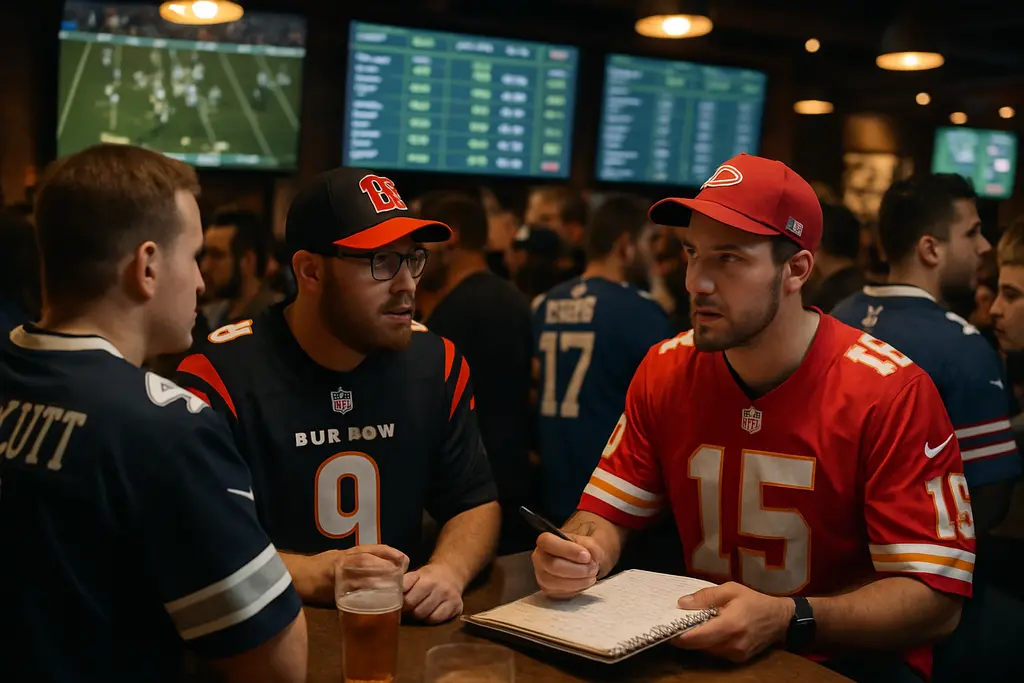
Prediction Markets NFL pricing became a useful test case after Week 1 of the 2026 regular season. The NFL regular season opened on September 9, 2026, and every Week 1 event discussed here had already been settled by October 5, 2026. This makes it a retrospective pricing review rather than a betting prompt. The important question is whether the posted cost, explicit fees, product type, liquidity, and rules offered users a better option than a regulated sportsbook in specific Week 1 markets.
The answer was mixed. On the surface, some exchange-style prices looked tighter, especially for totals. However, other markets were less favorable once fees and product structure were factored in. Sportsbooks also maintained advantages in menu depth, user familiarity, live-betting presentation, props, and same-game formats. For readers comparing these models, it’s crucial to separate price from prediction and avoid assuming any quoted number is a guarantee.
What Prediction Markets NFL Pricing Showed
The Week 1 Sample
Citizens JMP reviewed Week 1 pricing with data pulled on Friday, September 11, 2026, across 28 moneyline and totals markets. In that sample, Kalshi’s blended implied vig was 4.32%, compared with FanDuel at 4.44% and DraftKings at 4.51%, according to the Week 1 breakdown reported by TrueEdge Wire. On the surface, Kalshi was around 12 basis points cheaper than FanDuel and around 19 basis points cheaper than DraftKings across the blended moneyline and total set.
That gap was real in the cited sample, but not substantial enough to support broad claims. A basis-point edge might be significant to high-volume, price-sensitive users, but it can quickly vanish if the user incurs trading fees or navigates a wide spread. It also doesn’t mean every game, side, or bet type was cheaper outside the sportsbook model.
Why Blended Numbers Can Mislead
The market-by-market split was more relevant than the headline. In the same Week 1 analysis, FanDuel had a slightly lower moneyline vig than Kalshi, with FanDuel at 4.08% and Kalshi at 4.14%. This indicated sportsbook pricing was marginally better on sides in that part of the sample.
Totals presented a different scenario. Kalshi was listed at about 4.50% vig on over/unders, compared with DraftKings at about 4.71% and FanDuel at about 4.80%. That was the clearer pricing advantage in the cited Week 1 data. The takeaway is narrow yet valuable: the cheaper venue depended on the market type. A bettor comparing prices post-event needed to consider moneylines and totals separately rather than relying on one blended average.
Where Fees Changed The Comparison
Prediction Markets NFL And The Fee Question
Fees were the main reason the Week 1 comparison required caution. The reported Kalshi trading fee for a standard NFL side priced 60 cents against 40 cents was about $1.68 per 100 contracts on entry. The research notes described this as adding around 2.8% of the amount at risk. Such costs could negate a small blended vig advantage, particularly when the quoted pricing edge was only about 0.12 percentage points against FanDuel in the aggregate Week 1 sample.
This illustrates where exchange-style pricing can appear cleaner than it feels in a settled account. A 60-cent YES contract is simple to understand as a rough 60% implied probability before costs. A sportsbook moneyline hides margin within the odds. Yet, a visible price is not synonymous with a free price. Users must still consider entry fees, exit costs if they trade out, bid-ask spreads, and the chance that the visible quote was unavailable at their desired size.
Combo Markets Were Not Cheaper
The disadvantage became more apparent in parlay-style combinations. The Week 1 research notes highlighted favorite-and-over markets where Kalshi’s implied vig was about 23.8%, whereas FanDuel and DraftKings were around 22.0% before considering transaction fees. This difference is not trivial. It indicates that prediction markets were not uniformly lower-cost once users ventured beyond straight moneylines and totals.
This also aligns with a broader sportsbook comparison point. Operators often price parlays and combined outcomes differently from straight bets because correlation, risk limits, customer behavior, and product demand all play a role. A sharper market on one type can still be costly on another. Week 1 illustrated why users shouldn’t generalize from a single headline vig number.
Market Depth And Usability
Liquidity Is Not The Same As Price
A tight posted price only matters if there is sufficient depth to enter or exit without shifting the market. Prediction markets can provide transparent price discovery, but users still contend with order-book conditions. If the top quote is small, the effective price for a larger position may be worse than the displayed price. If the spread broadens near kickoff or after injury updates, the perceived edge can lessen or vanish.
Sportsbooks function differently. The bookmaker sets the odds and manages limits, liability, and movement. This might be less transparent than an order book, yet it may be simpler for many users to grasp. A sportsbook ticket offers a fixed price once accepted, whereas an exchange user needs to consider queue position, partial fills, and whether there will be another buyer or seller later.
Exiting Before Settlement
For Prediction Markets NFL users, the ability to sell a position before final settlement represented a meaningful structural difference. Action Network has described how prediction markets can permit users to sell contracts before outcomes are decided, while sportsbook cash-out features typically offer less flexibility and may come with less favorable pricing due to the operator’s offer mechanics Action Network.
This flexibility has both upsides and downsides. Exiting early can aid in managing exposure, but it is contingent on liquidity and the current market price. A user who entered at 60 cents might not be able to exit close to that level if game circumstances, injury information, or broader market sentiment shifted unfavorably. In this way, the prediction-market format adds a trading decision in addition to the initial sports opinion.
How Sportsbook Comparison Should Be Read

Operator Menus Still Matter
The Week 1 pricing focused on moneylines, totals, and combo-style markets. While useful, this does not encompass the entire sportsbook product. Regulated sportsbooks frequently compete through live betting, player props, same-game parlays, odds boosts, rewards mechanics, and familiar bet slips. These features don’t automatically improve the price, yet they explain why many users may still prefer sportsbook products even when an exchange-style venue offers a slightly tighter number on a straight total.
Sportsbooks also vary by state and operator. A user in one jurisdiction might experience different menus, limits, promotions, or cash-out options than a user elsewhere. Thus, comparisons should occur at the market level, using the available price, rules, and costs at the moment. Readers seeking a broader perspective can consult our analysis of NFL betting markets, which delineates between sportsbook and exchange-style mechanics without portraying either side as a guaranteed solution.
Rules, Access, And Responsible Evaluation
Prediction markets and sportsbooks are not regulated identically, and access may depend on jurisdiction, product rules, and platform restrictions. Users should carefully read settlement terms before treating an event contract like a normal wager. A market may seem straightforward, but the resolution source, fee structure, trading rules, and dispute process can influence how the position is handled.
The responsible comparison is also personal. Someone preferring a simple fixed-odds ticket may not find value in an order book, even if a price appears slightly better. Someone prioritizing price discovery may disfavor sportsbook margins but must understand exchange fees. For a broader operator-comparison perspective rather than a direct recommendation, a related site in the network, Champion Sportsbook, serves as a starting point for evaluating product structure and rules.
Prediction Markets NFL Week 1 Pricing Read
A Careful Takeaway
The Week 1 data supported a limited claim: prediction-market pricing was competitive in straight NFL markets, appearing more robust on totals than moneylines in the studied sample. It did not support the position that prediction markets were invariably cheaper. Fees, combo-market pricing, liquidity, and exit conditions all altered the comparison.
A fair Prediction Markets NFL review should be moderated in its language. Kalshi’s blended Week 1 vig was slightly lower than FanDuel and DraftKings across the discussed moneyline and totals sample, but FanDuel offered cheaper moneylines, Kalshi was stronger on totals, and combo markets were less advantageous for Kalshi before fees. This is a pricing observation, not a forecast. It helps readers grasp market cost post-game settlement, without conveying any future NFL position as a guaranteed outcome.
Leave a Reply